Thursday, December 11, 2025

What is a critique and how do you get a "good" one? Part 1: feedback from family or friends #writing #books #AmWriting #WriteTi

This is an excerpt from You Can Write for Children: How to Write Great Stories, Articles, and Books for Kids and Teenagers, on getting a critique from family or friends.

Why Get a Critique?

If you are not writing for publication, and you don’t care about improving as a writer, you don’t need to take criticism from anyone. That’s fine; it’s totally your decision. But if you do hope to publish your work, or if you simply want to learn to be a better storyteller, you’ll need to get feedback at some point. Few people are good at analyzing their own writing, so getting critiques is an important part of editing and learning how to improve your writing.

Getting critical feedback can be painful. Sometimes this comes from the critique partner being unnecessarily harsh. At other times, it comes from the writer being overly sensitive. If your manuscript is your “baby,” you might not appreciate any comments that suggest it isn’t perfect. But praise alone won’t help you improve your writing.

Try to keep in mind that a critique isn’t an insult. It’s a way to help you make the manuscript even better. Also, it isn’t about you as a person, or even you as a writer. It’s about this particular manuscript, at this moment in time. If the manuscript is flawed, that’s all right. In fact, it’s usually a necessary part of the process. Most writers produce horrible, ugly, embarrassing manuscripts in the early stages. It’s the editing that makes those stories wonderful. A quote contributed to several different authors is “You can’t edit a blank page.” Get something down, and then figure out how to make it better. Getting a critique can help you figure out how to make it better.

Finally, any critique advice is a matter of opinion. If several people are pointing out a problem, there’s likely a problem. But if only one person makes a comment, and it doesn’t resonate with you, it’s fine to ignore it or get a second opinion. Ultimately you have to write something that pleases you; it’s not your job to change your manuscript based on every piece of advice that anybody cares to give.

You can get feedback in several different ways. Today we'll look at getting critiques from family members or friends.

I help!
Family and Friends

You may have family members or friends who are happy to read your writing. Usually these people are not experienced writers. That means they may not know how to identify story problems or give advice about them. Still, they might be able to offer opinions from a reader’s perspective.

When getting critiques from family and friends, it’s best to keep your request simple. You might ask your readers to mark any place they:

  • Are bored
  • Are confused
  • Don’t believe things would happen that way

That’s simple enough for anyone to follow, and it should point out trouble spots in the manuscript. For a little more detail, Freelance Editor Karen R. Sanderson offers this list to provide guidance to your critique partners:

Critical: Please provide an honest response, not only compliments.

Real: Does it feel real and does the dialogue read like people actually talk?

Imagery: Can you imagine the scenes, places, and people?

Timing: Did the timing of events, chapters, and character introductions make sense?

Interesting: Did it capture your interest or were you ready to put it down after the first paragraph?

Questions: Did you have questions? Were you unsure of what was happening or why?

Unique: Is it unique or is it like a dozen other books you wished you hadn’t purchased?

Engaging: Were you engaged in the characters, the scenes, the events?

By giving a little direction, you emphasize that you truly want feedback (not only compliments), and you encourage people to look at the bigger picture and not just mark any typos they notice. Otherwise you may only hear good things. Praise is delightful, but when it comes from people you know, the rave reviews do not necessarily mean your work is wonderful. It could mean those people don’t want to hurt your feelings. It could mean they don’t read enough in this genre to tell good from bad. Or it could simply mean that they like you and are predisposed to enjoy anything you write.

The latter issue is especially common with reading stories to your children, grandchildren, or students. They enjoy the attention and it’s fun to hear stories read aloud. People who know you well may also recognize family stories, which would not have the same appeal to an outside audience. For example, if you base a story on the antics of your family’s cat, your children may love it, but it may not resonate the same way with strangers.

Many professionals warn against taking feedback from non-writers too seriously. Editors and agents do not want to hear in your query letter that your children, grandchildren, students, etc. loved your work. That’s meaningless and might be taken as a sign that you are not a serious writer.

On the other hand, sometimes family members and friends offer blunt, even brutal, criticisms. Some people seem to think it’s OK to be rude to a loved one in a way they wouldn’t behave to a stranger. Some people may even be secretly trying to discourage you, so you’ll spend more time on them and not your new hobby. Others may honestly be trying to help but not know how to give balanced, encouraging feedback. Or maybe they don’t understand the kind of writing you are doing. Someone who only reads epic fantasy novels for adults may not be the best person to give feedback on a picture book for young children.

In short, feedback from friends and family can vary greatly in its helpfulness and hurtfulness. It can be especially crushing to hear negative reactions from a loved one. If someone’s comments make you feel sad or discouraged, maybe you don’t want to share your stories with that person in the future.

Of course, if you are not really ready to hear any criticism, don’t ask for it. It’s fine to share your work with family members or friends and let them know that you do not want comments, you simply want to share. If they insist on trying to provide criticism anyway, interrupt them. Make it clear that’s not their job; you only want support.

What challenges have you faced in getting feedback from family or friends?

Over the next few weeks, I'll be looking at getting feedback from other writers – including critique group challenges and characters – as well as taking classes and hiring a professional editor.

You can get this whole essay, and a lot more – including a chapter on Advanced Critique Questions – in You Can Write for Children: A Guide to Writing Great Stories, Articles, and Books for Kids and Teenagers. In this book, you will learn:

How to explore the wide variety of age ranges, genres, and styles in writing stories, articles and books for young people.
How to find ideas.
How to develop an idea into a story, article, or book.
The basics of character development, plot, setting, and theme.
How to use point of view, dialogue, and thoughts.
How to edit your work and get critiques.
Where to learn more on various subjects.

Order for Kindle, in paperback, or in Large Print paperback.

Chris Eboch is the author of over 100 books for children, including nonfiction and fiction, early reader through teen. Chris offers writing services, including developmental editing, book coaching, and writing for hire. See a list of her services. Learn about her online, on demand classes here.

Thursday, December 4, 2025

Is Your Critique Group Full of These Characters? #amwriting tips to help you get better feedback on your #writing

This 
excerpt from How to Write Great Stories, Articles, and Books for Kids and Teenagers is from the chapter on Critiques. See the list of topics to the right to find more on critiques.

Here are some specific character types to watch out for in your critique group.

Critique Group Characters

Watch out for the following personality types in a critique group:
  
It's all wonderful!
Art by Lois Bradley
  • The Cheerleader. She loves everything you do! This is gratifying, especially when you are doubting your talent, but it’s not particularly helpful in improving your work.

  • The Grammarian. He doesn’t have a lot to say about the content of your work, but he’ll circle every typo in red pen and may insist you follow strict grammar rules that have gone out of date. (By the way, I never use red pen on critiques – blue, purple, or green ink stands out from the black text, without that negative association of graded English papers.)

    Me? An opinion?
  • The Mouse. You can’t tell whether or not she likes your work, because she never voices an opinion. She might hide behind the excuse that she’s not experienced enough to offer feedback. She’ll do this for years.

  • The Perpetual Beginner. He truly isn’t experienced enough to offer feedback, and he never seems to improve. This type can be divided into The Rut, who brings in the same manuscript over and over without ever making substantial changes (despite all your thoughtful advice) and The Hummingbird, who throws away a manuscript as soon as it’s gotten one negative comment, preferring to work on something new.

  • The Chatterbox. She wants to talk about anything and everything – other than the manuscripts you’re supposed to be critiquing. This person sees a writing group as a social occasion, not a way to improve your craft.

    That's not how I'd do it.
  • Father Knows Best. He always has an opinion, which he voices clearly and often. He prefers to discuss how he would write the story if it were his own, ignoring the author’s vision.

  • The Bully. She enjoys tearing apart your manuscript. No suggestions, just criticisms bordering on insults.

All these characters have one thing in common. They don’t help you improve your work. Having one Cheerleader in the group can be nice, as it means you’ll hear some praise. The Grammarian may be useful, although often those comments are unnecessary and time-consuming when you are still developing a story and focusing on the big picture, not proofreading.

The Mouse and the Perpetual Beginner don’t do a lot of harm, but they waste your time. Why should you spend hours doing thoughtful critiques when you’re not getting anything in return? (Note, sometimes these people can learn over time. Ask for the type of feedback you want, such as "Please point out where you got bored or confused," or encourage them to use a critique form that asks specific questions. But if they won’t make an effort to be better critique partners, it may be time to end the relationship.)

Some people hate everything
The Chatterbox is an even bigger time waster. Sometimes that person can be controlled by having a set time for visiting, perhaps the first or last half hour of each meeting. Including some social time is a way for the group to bond. Some critique groups like to start or end with a nice potluck meal. You could also have one or two meetings a year that are purely social. If there’s a way to get Father Knows Best or the Bully to change their behavior, I don’t know it. They should be avoided.

A good critique is kind and supportive, pointing out both good qualities and weak spots in your manuscript, and giving you ideas for how to improve it. The best critiques leave you fired up and ready to get to work on revisions, even if you know you have a lot of work ahead. Look for people who can provide that.

If you've run into these characters, do you have advice on dealing with them? Are there other character types to watch out for?

You can get this whole essay, and a lot more – including a chapter on Advanced Critique Questions – in You Can Write for Children: A Guide to Writing Great Stories, Articles, and Books for Kids and TeenagersOrder for Kindle, in paperback, or in Large Print paperback.

Cat emoticons by Lois Bradley.

Chris Eboch is the author of over 100 books for children, including nonfiction and fiction, early reader through teen. Her novels for ages nine and up include The Eyes of Pharaoh, a mystery in ancient Egypt; The Well of Sacrifice, a Mayan adventure used in many schools; The Genie’s Gift, a middle eastern fantasy; and the Haunted series, about kids who travel with a ghost hunter TV show, which starts with The Ghost on the Stairs. Learn more at chriseboch.com or her Amazon page

She offers writing services, including developmental editing, book coaching, and writing for hire. See a list of her services. Learn about her online, on demand classes here.

Friday, November 28, 2025

Black Friday deal on Publisher Rocket! #BookMarketing #Publishing #BookPromo

Publisher Rocket is offering a great Black Friday deal: Anyone who purchases will get a total of $80 in savings! This includes:

Lifetime access to Publisher Rocket for a single, one-time payment

$30 off the purchase of Publisher Rocket

Free Mastering Keywords and Categories course ($49.99 value)

This is a one-time payment and a lifetime deal, so it's a great opportunity for hungry authors eager to find great bargains. Get it here.

What is Publisher Rocket? 

"The ultimate tool for authors to optimize their book listings and dominate the Amazon marketplace." (Keywords and categories help at other retailers too!)

Discover Profitable Keywords

A quick search helps you find the best Amazon keywords to optimize your book listings and boost visibility.

Analyze Popular Book Categories

Amazon has 19,000+ categories. Which is best for your book? Dive deep to find the perfect categories for your book to maximize sales.

Learn from Competitors

Use successful similar authors or books to gain valuable insights into their sales, rankings, and marketing strategies.

Supercharge Your Amazon Ads

Quickly generate hundreds of high-converting keywords for your AMS campaigns. Save time and earn more! Publisher Rocket has info on Amazon markets around the world.

 Get it here. (Only valid through December 2rd.)

Monday, November 17, 2025

What is a Developmental Editor? You can get critique feedback from a pro! #writing #AmWriting #WriteTip #WritersLife

Expert writers often share advice
I’ve released a new book on the craft of writing, called You Can Write for Children: How to Write Great Stories, Articles, and Books for Kids and Teenagers. To celebrate the release, I’m sharing a excerpt from the chapter on Critiques. So far I've shared the intro to the chapter and advice on getting feedback from family and friends; discussed some basics about critique groups; shared challenges to watch out for in a critique group, and listed specific character types to watch out for in your critique group, and taking classes to improve your writing. Now let's look at one final option, hiring a professional editor or critiquer.

Hiring a Pro

It’s tempting to stick with trading manuscripts for free, and you may get some excellent feedback that way. However, getting feedback from family, friends, and even other writers might not be enough to perfect your work. Many critique partners won’t want to read your manuscript through multiple revisions. And unless they are experienced writers and writing teachers, critique partners may miss issues a professional editor would catch.

Hiring a pro may provide better advice. You might ask a friend to help you bandage a scraped knee, but if you have a bone sticking out of your leg, you’re going to the hospital. When the situation is serious, professional experience counts, so if you are serious about your writing, consider using a professional editor.

Professional developmental editors can help writers shape their manuscripts. They can help beginning or intermediate writers identify weak spots in their skill sets, acting as a one-on-one tutor. They provide expertise that family and friends, and even critique partners, often lack. A professional editor will prioritize your work because it’s a job.

Some of my critique clients have mentioned that they’ve taken a manuscript through a critique group, but they know it still needs work. They’ve gone as far as they can with critique group help, so they’re turning to a paid critique. If someone is paying me several hundred dollars to critique a novel, I’m going to devote my time to getting it done well and quickly. I’ll dig deep and be as tough – but helpful – as I can be. My novel critique letters typically run five or six single-spaced pages, with comments broken down into categories such as Characters, Setting, Plot (Beginning, Middle, and End), Theme, and Style. Most critique group members don’t have that kind of time, even if they have the skills to identify the problems.

If you aren’t sure if you need professional help, do a trial run with a manuscript you’ve finished. Send out a half dozen queries to agents or editors and see what kind of response you get. I’ve had clients come to me because editors have turned down a manuscript they “didn’t love enough.” This is a good indicator that the idea may be strong, but the writing isn’t there yet. No hired editor can guarantee that your manuscript will ever sell, but a good editor can improve the manuscript and also teach you to be a better writer.

If you are writing purely for your own enjoyment, or to share your work with family and friends, you don’t need to worry about producing something of publishable quality. But if you are writing for publication, and agents or editors don’t seem impressed with your work, a professional critique can teach you a lot.

Preparing for the Edit

Even if you decide to hire a freelance editor, you’ll get more from the experience by turning in a draft you’ve already edited. According to freelance editor Linda Lane, “Carefully preparing your manuscript for an editor rather than simply forwarding the latest draft saves dollars, because freelance editors often charge an hourly rate.” (Use the tips in Chapter 14: Editing in You Can Write for Children to revise your manuscript as much as you can on your own.) If you have critique partners, revise based on their feedback as well.

I'm an expert!
Then start looking for a professional editor. However, if you want a professional critique on the content of your book – the plot, characters, overall writing style, and so forth – don’t wait until you think you have a completely polished draft. If it turns out you have major problems with the plot or character development, it’s better to identify those before you’ve gone through 10 drafts and have proofread the whole thing.

Ask other writers for recommendations to editors. Try the SCBWI online discussion boards or local writers’ groups. Make sure the editor has experience with the kind of writing you are doing. Someone who only writes for adults is probably not the best editor for your children’s picture book.

Communicate clearly with a prospective editor to make sure you know what you’re getting. Typically content or developmental editors look at the big picture items. Copy editors and proofreaders can catch inconsistencies and spelling or grammar errors. Start by working with someone who will focus on content, structure, and stylistic weaknesses. Don’t pay someone to fix your typos when you might still have major changes to make. Ask questions or ask for a sample to make sure you are hiring the right editor for your needs.

Professional Editors


You can get this whole essay, and a lot more – including a chapter on Advanced Critique Questions – in You Can Write for Children: A Guide to Writing Great Stories, Articles, and Books for Kids and Teenagers.

Remember the magic of bedtime stories? When you write for children, you have the most appreciative audience in the world. But to reach that audience, you need to write fresh, dynamic stories, whether you’re writing rhymed picture books, middle grade mysteries, edgy teen novels, nonfiction, or something else.

Order for Kindle, in paperback, or in Large Print paperback.

Friday, November 14, 2025

Authors and marketers, don't miss the $39 Depositphotos deal! #Marketing #indieauthors #selfpublishing #ContentCreator #influencers

image from Depositphotos


The Depositphotos deal is back! “Access millions of royalty-free stock assets using this content library. One-time payment. Lifetime deal. 100 one-time image/vector, video, or audio file credits from Depositphotos for only $39.”


Get it here (affiliate link).

I've used this for self published book covers as well as social media posts. I find it has a good selection and is much more safe and reliable (in terms of proper licensing) than the completely free places that could get you sued. 

image from Depositphotos

It has both photos and illustrations, and you can search for photos with no people or a certain number of people, and identify the gender, age range, and ethnicity. It also has flat lays – images shot from above with carefully arranged objects like flowers or holiday items, with space in the middle to add your book cover or text.

It's added an AI generator, which may or may not be a good thing depending on your views, but you don't have to use it. I asked if it was possible to exclude AI generated images from the search and got this response: "We do not accept AI-generated images from our authors. So you can feel free to browse the collection. If you have any doubts about any image, you may provide its ID so we can check it with the content team to be 100% sure."

Cover and flat lay images from Depositphotos

This is by far one of the best deals out there for authors or anyone producing a lot of social media! You can even stack it to double or triple the number of images you get and make sure you have enough for years.

Get the deal here.

Bonus: Grab your Depositphotos images and use them in Canva, a free browser-based design program. (I used it for all the images here.)  Canva bought Affinity and is making it free, forever. Per publishing guru David Gaughran, Affinity is professional, download-and-keep software for PC/Mac (coming to the iPad app soon). It a popular alternative to Adobe’s expensive creative suite with Canva integration.

Monday, June 2, 2025

Make reading easier on your body with these tools! #writing #reading #amreading

If you read ebooks so much your wrists or other body parts start to hurt, you may benefit from these tools! (Prices/discounts are from the time of this writing.)


NKV Pillow Phone Holder,
 for Sofa, Bed and Desk - Phone Soft Pad Dock Compatible with Phone/Kindle, E-Reader -15% now $17


Viozon Tablet Stand Pillow, with cupholders (in white or black), great for in bed or relaxing on the couch -5% now $37.99


Remote Control Page Turner
: Read in bed and hands-free with this remote for Kindle and Kobo eReaders, Camera Camcorder, iPad -20% now $16


Tuesday, January 7, 2025

How to Pitch a Novel: Finding Your Hook #writing #publishing #kidlit #yalit #MGLit

An orphan explores his magical powers at a school for wizards. Twins discover they are really genies. Death narrates a World War II story. The young descendants of Sherlock Holmes tackle one of his unsolved cases. 

A hook—in this case the “high concept” idea—can grab the reader’s attention and make a book stand out. Here are the books with the above hooks.

        Harry Potter series, by J. K Rowling
        Children of the Lamp series, by P. B. Kerr
        The Book Thief, by Markus Zusak.
        The 100-Year-Old Secret, by Tracy Barrett
       
Do you need a hook? Well, in today’s competitive market, it can definitely help. It’s a quick way to summarize your idea for an editor or agent, handy for writing conferences. So how do you figure out what yours is—or if you have one?

One option is comparisons—I So Don’t Do Mysteries was described as Nancy Drew with a Devil Meets Prada makeover by the publisher sales team trying to sell the book to bookstores and libraries. After Die Hard, action movies were often described as “Die Hard on a plane” or “Die Hard on a boat.”

On the jacket flap, books often used an “except” or “but” twist. The second part is the twist on a common plot. — A woman thinks her ex-husband is going to try to kill her, but he kidnaps her daughter instead.

If your book isn’t trendy, don’t despair. What hooks the reader is individual to that reader. Some may read any book set in a certain time or place, or love talking animals. Don’t try to make your book sound like it fits some hot trend, if it doesn’t. Instead try to hook your readers. Who are your target readers, and what will draw them to this book?

A good hook is simple and short—sometimes it’s referred to as a one-sentence synopsis or an elevator pitch (from the idea that you might have 30 seconds in an elevator to grab an editor’s attention). It’s not long-winded, where you are trying to cram everything into one run-on sentence. The hook doesn’t necessarily tell you the plot, but it gives you the flavor of the book and arouses interest. It may be simply the premise.

For example: In The Accidental Detective humorous mystery series, a witty journalist solves mysteries in Arizona and tackles the challenges of turning fifty. 

This sentence identifies the MC as a journalist turning fifty, it says she'll solve crimes, and it identifies the setting of Arizona. "Witty" suggests this will be humorous (as does calling the series a "humorous mystery series"). 

There is no specific plot in that series pitch. Here's the pitch for Book 1, Something Shady at Sunshine Haven

When patients are dying at an Alzheimer’s unit, a former war correspondent must use her journalism skills to uncover the killer and save her mother. 

That sentence identifies the MC and her challenge, with high stakes, since her mother is one of the people in danger. 

You can find books similar to yours on Amazon, Goodreads etc. and look at the first sentence of the book description, which may be in bold or italics. This is often a good hook. For example:

Fatima Tate Takes the Cake, by Khadijah VanBrakle: 

Fatima Tate wants to be a baker AND enjoy some innocent flirting with her hot friend Raheem—but her strict Muslim parents would never approve of either.

Bunnybirds #1, by Natalie Linn:

Princess Aster must leave home to discover why her people are disappearing—even if it means journeying over the rim of the world itself—in this animal fantasy graphic novel perfect for fans of blockbuster series like Warriors and Wings of Fire.

This works for picture books too.

Too Much: My Great Big Native Family, by Laurel Goodluck, illustrated by  Bridget George: 

A little boy wants a chance to shine on his own but discovers that being apart from his large and lively Native family isn’t necessarily better in this heartwarming and humorous picture book.

(Note that it can be risky to compliment your own work in a query. I might call my own book humorous, but I wouldn't claim it's "laugh out loud funny." Leave the big praise for marketing.)

EXERCISE: For practice, name a favorite or recent book—how would you describe it to a friend? Would you pick it up if you heard that description? Then check the opening of its marketing description. Is that a good hook? Why or why not? Try this a few times.

EXCERCISE: Write a simple synopsis of your work. Don’t worry about length or clarity. Jot down the who, what, when, where, and why. Now you have some idea of the most interesting and important aspects of the work. Turn it into a one-sentence synopsis with your hook.

To start focusing on your hook, ask, What is the conflict, in terms of X versus Y? Once you have your hook, you can expand upon that one-sentence pitch for a query letter or longer conversation. (Please note that it's better to have two or even three short, snappy sentences than one very long sentence where you try to cram in everything. A good hook is one you can remember and share verbally fairly easily, without worrying about getting exactly the right word in the right place.)

Pixar is said to rely on this structure to get at the heart of a story:
Once upon a time there was ... (Introduce the character, set the stage with when and where the story takes place.)
Every day... (Show the MC’s ordinary world.)
But one day... (Something changes to upset that routine—the inciting incident that gives the MC a new goal and forces them to act.)
Because of that... (Describe the consequences, how the MC reacts, a brief explanation of how Act II starts.)
Because of that... (Something else happens to push the story towards its conclusion; what the MC must do next to reach their goal or a new goal.)
Until finally... (How it resolves at the climax)

Try writing your synopsis this way in five or six concise sentences. Look up “Pixar Story Structure” for more detail.

More examples:
     In The Well of Sacrifice, a Mayan girl in ninth-century Guatemala rebels against the High Priest who sacrifices anyone challenging his power. 

     The Eyes of Pharaoh: When their friend disappears, Seshta and Horus spy on merchants, soldiers, and royalty, and start to suspect even The Eyes of Pharaoh, the powerful head of the secret police. 

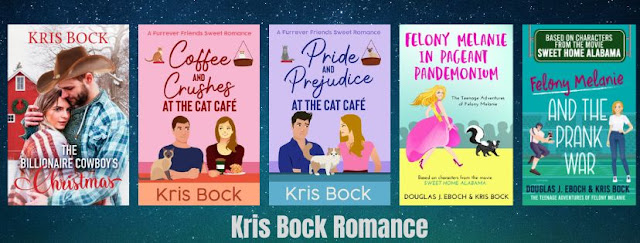
     Coffee and Crushes at the Cat Café: Kari doesn’t have time for love when she’s opening her new cat café. But when a sexy master baker walks in, how can she resist?
    The Billionaire Cowboy’s Christmas: Carly has crushed on Josh for years, but when he wins a fortune in the lottery, how can she prove she wants him for himself? 
     The Teenage Adventures of Felony Melanie: Meet teen “Felony Melanie” years before the movie Sweet Home Alabama and follow the crazy antics of Melanie, Jake, and their friends as teens in this fun-filled romantic comedy series. (This one is more vague, because it relies on the movie as the hook for the series. FYI, I cowrote this series with my brother who wrote the original screenplay for the movie, which is why we were legally able to do this.)

More advice on writing a pitch:

How to Write a Book Pitch (and Why it Matters) at The Novelry.

How to write a killer one sentence pitch (or logline) for novels and memoirs, by Nathan Bransford

How to Pitch a Book – Your Guide to Writing the Perfect Book Pitch, by Alyssa Matesic

Chris also offers online, on-demand courses (start whenever you want and work at your own pace) 

Advanced Plotting—Keep Those Pages Turning: Learn advanced techniques that will make a decent plot dynamic. Take this online course at your own pace. It includes six videos plus handouts with notes and more resources for $100. Get Advanced Plotting here. 

You Can Write for Children: Learn about children’s publishing—opportunities and challenges, genres, age ranges, book and magazine markets, and resources to keep you going. Watch this three-session video course at your own pace. It's five chapters for $60. Get You Can Write for Children here


Educational Publishing: Make Money Writing for the Educational Market: Do you want to make money from writing? Are you willing and able to write on assignment if given a topic, word count, grade level, and deadline? Then you may be perfect for educational work for hire! 7 chapters, 14 lessons, $150 or the $350 subscription option lets you send your work to me for feedback. Get the Ed Pub course here.


Chris Eboch is the author of over 100 books for children, including nonfiction and fiction, early reader through teen. Her novels for ages nine and up include The Eyes of Pharaoh, a mystery in ancient Egypt; The Well of Sacrifice, a Mayan adventure used in many schools; and The Genie’s Gift, a middle eastern fantasy. Her writing craft books include You Can Write for Children: How to Write Great Stories, Articles, and Books for Kids and Teenagers, and Advanced Plotting. Learn more at chriseboch.com. 

Chris writes mystery and romance for adults as Kris Bock. Learn more at KrisBock.com. In the Accidental Detective series, a witty journalist solves mysteries in Arizona and tackles the challenges of turning fifty. The Furrever Friends Sweet Romance series features the employees and customers at a cat café. In the Accidental Billionaire Cowboys series, a Texas ranching family wins a fortune in the lottery, which causes as many problems as it solves. Sign up for the Kris Bock Mystery and Romance newsletter and get a free Accidental Detective short story and bonus material, a free 30-page sweet romance set in the world of the Furrever Friends cat café, and a printable copy of the recipes mentioned in the cat café novels.

Kris also writes a series with her brother, scriptwriter Douglas J Eboch, who wrote the original screenplay for the movie Sweet Home Alabama. The Teenage Adventures of Felony Melanie follows the crazy antics of Melanie, Jake, and their friends a decade before the events of the movie. Sign up for the romantic comedy newsletter to get a short story preview

Monday, September 23, 2024

Writing and Running: 6 Lessons Learned from Jogging #NWHFD #fitnessday #writing #amwriting

In honor of National Women's Health & Fitness Day (September 25, #NWHFD #fitnessday), I wanted to share some lessons I learned from running.
 
In March of 2011 I started jogging. Despite the occasional illness, injury, and ‘I don’t wanna,’ I’m still getting out regularly. On one long and rather tedious solo run, I started making connections between jogging and writing and life.
 
Get Some Running Buddies
 
It helps to have inspiration. I started jogging with a Couch to 5K group that met twice a week. Having the regular schedule kept us on track. The program helped us pace ourselves, starting with short runs and frequent walks, and working up to a 45 minute run. We also had an experienced leader to offer advice.
 
Several of us continued running together after the program ended. I wouldn’t get out there as often if people weren’t waiting for me. I’d be tempted to stop early, if I didn’t have the encouragement of the group. Hey, peer pressure is powerful! You might as well make it work for you. Plus, it’s more fun to run with other people.

For writers, it’s important to find the right peer group for your needs. For many, this is a critique group. They may be large or small, meet in person or online, have open or closed membership, get together weekly or monthly or as needed. Finding a group that suits your needs is invaluable.
 
Other writers share goals and deadlines, checking in with a friend daily or weekly to report progress. There’s that peer pressure again! Even a non-writing friend can help hold you accountable. (But choose carefully. Most people don't understand writing or the publishing business and have no idea how long it takes to get something published. Many people don't even realize that you may never sell a manuscript. You don't want someone making you feel bad because you haven't finished and sold your novel within six months.)
 
Finally, social groups can provide camaraderie and networking. I live in a small town with a science and engineering college; I know far more computer geeks than writers. But by making monthly trips to Albuquerque to attend a writing meeting, I’ve made many friends who understand what I do. I’ve also made connections by teaching workshops and guest speaking for groups like Sisters in Crime. For those who can’t attend in person, online discussion boards, listserves, and online classes offer information and a sense of connection.
 
It’s Distance, Not Speed
 
It really is about the journey, not how fast you get there. Pace yourself, and enjoy the journey, or you might burn out along the way. If you can see the end, or at least imagine the cheering crowds and free food, it might give you the extra boost you need to keep going. But take time to enjoy the sights, and the experience will be a lot more fun.
 
As a writer, don’t focus so much on the response to your query letters. Sure, celebrate successes, and try to learn from disappointments, but put most of your energy into enjoying the journey. (That works for the rest of life, too.)
 
Robin LaFevers had a post at Writer Unboxed about keeping creative play in your writing.
 
But Keep Moving
 
A slow pace may get you there, but if you have a long way to go, you might as well do it running. A marathon will take a lot longer at a stroll than at a jog, even a slow jog. Run when you can, walk when you need a rest, but keep moving. That’s the only way to reach the end.
 
Take the time you need to learn and practice your writing craft. Do as many drafts as you need to polish your novel. Don’t rush, but do keep working. Write a page a day, and you’ll have a complete draft in a year. It may not be perfect, but it will be more than what you started with.


Practice Makes Perfect, or At Least Lessens the Pain
 
If you’re training, you need to get out regularly. Running once a month will just leave you sore and frustrated each time, and you won’t see any progress in your fitness.

It’s the same with writing. Establishing habits and sticking to them will keep your mind fit. Writing several times a week will hone your skills and make it easier to get started next time.

Beware of Shortcuts
 
If I map out a 5K run, but take every shortcut, that could cut the distance down to 3 1/2K. Easier, sure, but that won’t prepare me for running a 10K. It’s the same with life. Whether you’re trying to switch careers, meet the right man or woman, or finish a novel, some shortcuts may help, but others may do more harm than good.
 
I work with a lot of writing students. The beginners want to know if they’ll get published after taking one course. Nobody wants to spend 10 years learning how to write, but you need to do the work in order to earn the reward at the end. If you beg your friend to send your rough draft to her editor, you’ll blow your chance to make the best use of that connection. If you self publish your work before it’s ready, you’ll waste time that could be better spent working on your craft.
 
Sometimes the long, hard path is the only one that gets you where you want to go.

Push Yourself Sometimes

With enough practice, you should get better. When I started jogging, it was a struggle to go for 10 minutes without a break. Six months later, I could make it through 45 minutes without stopping.
 
And then I plateaued. Jogging had become comfortable, if not easy. Why cause more pain by trying to go farther or faster?
 
Because that’s the only way to get better. And most likely, it’s the only way to stay interested. Fortunately, one of my jogging partners is great about coming up with new workouts. We add in some sprints one day, do hills another day. We choose different routes on different terrains. Variety keeps it interesting, which makes it easier to work hard.
 
With my writing, I find that I get bored if I become too comfortable with something. After publishing a dozen children’s books as Chris Eboch, I wanted a change. I began writing romantic suspense for adults, using the name Kris Bock. This brought new challenges – writing books two or three times as long as what I was used to, exploring romantic subplots, delving deeper into character. I didn’t always get things right the first time, but I became a better writer – and I renewed my interest in writing.

Online, on-demand writing courses
 
Start whenever you want and work at your own pace.
Please note:

When you are new to EzyCourse, you will need to sign up and get a password first. Then return to the course page to enroll and pay. You will not have access to the course until you "Complete Purchase."  
 
Advanced Plotting—Keep Those Pages Turning: Learn advanced techniques that will make a decent plot dynamic. Take this online course at your own pace. It includes six videos plus handouts with notes and more resources for $100. Get Advanced Plotting here.
 
You Can Write for Children: Learn about children’s publishing—opportunities and challenges, genres, age ranges, book and magazine markets, and resources to keep you going. Watch this three-session video course at your own pace. It's five chapters for $60. Get You Can Write for Children here

Educational Publishing: Make Money Writing for the Educational Market: Do you want to make money from writing? Are you willing and able to write on assignment if given a topic, word count, grade level, and deadline? Then you may be perfect for educational work for hire! 7 chapters, 14 lessons, $150 or the $350 subscription option lets you send your work to me for feedback. Get the Ed Pub course here.