Showing posts with label writing life. Show all posts

Monday, November 20, 2023

Bios Made Easy: Tips for writing the perfect author bio for each purpose #amwriting #writing #writetip #writelife #author

Writers need bios, for query letters, on websites, for conference brochures. If we are writers surely we can write about ourselves. Yet while coordinating writing conferences, I discovered that even published authors often write poor bios, whether through modesty, carelessness, or overwriting. Many bios are entertaining, but don’t do their job.

The job is selling yourself and your books. Keep that focus in mind and the rest will follow.

Content: List the genre you write and perhaps name a couple of your publications. If you have many published books, you can mention the number but only go into detail with two or three – perhaps the most recent or popular. Specify the genre, as titles aren’t always clear by themselves. If you don’t have published books, mention your other credentials – “Cub Newshound’s articles appear in Slate,” for example.

Don’t get carried away listing awards. If each book has four or five minor awards, the reader bogs down in dull details. List the most prestigious, or combine them – “Ms. Inkslinger’s books have received five Readers’ Choice Awards from various states.”

Relevancy: If someone is considering buying your book or signing up to hear you speak, they want to know your success as a writer or speaker, not the names of your pets. Put your professional information first. Don’t start with your hobbies or childhood, unless something directly relates to your book. (For example, you’re a nurse and you wrote a hospital drama or you have seven cats and you write mysteries featuring cats.) Don’t thank your family for their support. Save that for your book dedications.

There’s another reason to put the key information up front. If you are submitting news to a media site or a quick bio to a conference coordinator, the editor may cut to save space. Make it easy for them to keep the first couple of sentences and cut the rest.

Style: You may need different bios for different uses – playful on a book flap; professional for a newspaper article; focused on teaching experience for a conference catalog; praising your popularity with readers for a book signing. Regardless, focus on information. Humor and lively writing are fine, but don’t get too wrapped up in sounding “literary.”

In a large conference brochure, the designer probably wants consistent style. A touch of formality may be appropriate – you’re trying to portray yourself as a professional. Pretend you’re someone else writing about you in the third person. “Bard Wordsmith is an award-winning author….” For a query letter, use first person. A website could go either way, but be consistent.

Length: Keep it short and to the point. If your bio will stand alone, on an individual brochure or flyer, try 100-200 words. If your bio will appear along with others, 50-100 words is plenty (or whatever they request). Many people will skim anyway. Include your website for more information.

I keep several versions and cut and paste as needed. A longer bio may have a sentence or two about each of my series. A shorter one may focus on a single series or provide general info on the kind of books I write. If I’m promoting my critiquing/editing business, I would focus on my experience as a teacher and workshop leader, noting that people can get recommendations and rates on my website. The details depend on what I’m trying to sell.

For example:

Kris Bock writes romance, mystery, and suspense. (Seven words)

Sweet romance bio under 150 words:

Kris Bock writes romance, mystery, and suspense. In the Accidental Billionaire Cowboys series, a Texas ranching family wins a fortune in the lottery. Who wouldn't want to be a billionaire? Turns out winning the lottery causes as many problems as it solves. Her Furrever Friends Sweet Romance series features the employees and customers at a cat café. Watch as they fall in love with each other and shelter cats.

Kris also writes a series with her brother, scriptwriter Douglas J Eboch, who wrote the original screenplay for the movie Sweet Home Alabama. The Felony Melanie series follows the crazy antics of Melanie, Jake, and their friends a decade before the events of the movie.

Get a free 10,000-word story set in the world of the Furrever Friends cat café when you sign up for the Kris Bock newsletter. Learn more at www.krisbock.com. (142 words)

Mystery Bio under 100 words:

Kris Bock has lived in ten states and one foreign country but is now firmly planted in the Southwest, where many of her books are set. In the Accidental Detective series, a witty journalist solves mysteries in Arizona and tackles the challenges of turning fifty. Kris’s romantic suspense novels feature outdoor adventures and Southwestern landscapes. Readers have called these novels "Smart romance with an Indiana Jones feel." Learn more at www.krisbock.com or sign up for the Kris Bock newsletter and get a free Accidental Detective story and more. (88 words)

If I’m promoting my children’s books, I have a different set of bios for that name. I can also include the following with my Kris Bock bio if I’m targeting writers:

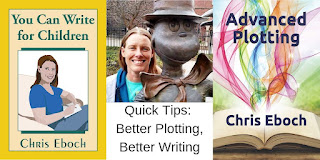
Kris writes for children under the name Chris Eboch. She is the author of two books on the craft of writing, Advanced Plotting and You Can Write for Children: How to Write Great Stories, Articles, and Books for Kids and Teenagers. Learn more at chriseboch.com. Check out her self-paced writing classes or The Ten-Minute Writer series on YouTube. (58 words)

In some circumstances, I might mention that I live in New Mexico and enjoy hiking, or that my husband and I keep ferrets. Those are nice personal tidbits, but they don’t prove I’m writing books people want to read.

Any of these options keep the bio to under 200 words. I want to make sure I’m including links to learn more if it’s going somewhere online, and beat simplest version of my website URL if it’s in print.

For a digital site, I might give readers the direct links to Amazon in the United States and Amazon in the United Kingdom, plus a “genius” link that will take people to their local site. That means fewer clicks before someone has a chance to buy my books.

So what about you?

To get started, make a list of the facts that you want to share. Then write a simple, straightforward paragraph that includes them. Next, decide if it’s appropriate to dress it up, but as in all good writing, communication comes first.

Friday, September 25, 2020

#AmWriting and Running: 6 #Writing Lessons Learned from Jogging #NWHFD #fitnessday

In March of 2011 I started jogging. Despite the occasional illness, injury, and ‘I don’t wanna,’ I’m still getting out regularly. On one long and rather tedious solo run, I started making connections between jogging and writing and life. I'm sharing them in honor of National Women's Health and Fitness Week (the last week in September each year). See more links on how to “Stay Well, Stay Safe” from WIC.

Get Some Running Buddies

It helps to have inspiration. I started jogging with a Couch to 5K group that met twice a week. Having the regular schedule kept us on track. The program helped us pace ourselves, starting with short runs and frequent walks, and working up to a 45 minute run. We also had an experienced leader to offer advice.

Several of us continued running together after the program ended. I wouldn’t get out there as often if people weren’t waiting for me. I’d be tempted to stop early, if I didn’t have the encouragement of the group. Hey, peer pressure is powerful! You might as well make it work for you. Plus, it’s more fun to run with other people. (Granted, the pandemic makes this more challenging. Some people are apparently doing virtual social jogs where they chat on a group phone call or Zoom.)

For writers, it’s important to find the right peer group for your needs. For many, this is a critique group. They may be large or small, meet in person or online, have open or closed membership, get together weekly or monthly or as needed. Finding a group that suits your needs is invaluable.

Other writers share goals and deadlines, checking in with a friend daily or weekly to report progress. There’s that peer pressure again! Even a non-writing friend can help hold you accountable. (But choose carefully. You don't need someone pressuring you to finish your novel in six months or run a seven-minute mile.)

Finally, social groups can provide camaraderie and networking. I live in a small town with a science and engineering college; I know far more computer geeks than writers. But by making monthly trips to Albuquerque to attend a writing meeting, I’ve made many friends who understand what I do. I’ve also made connections by teaching workshops and guest speaking for groups like Sisters in Crime. 

For those who can’t attend in person (or all of us during the pandemic), online discussion boards, listserves, and online classes offer information and a sense of connection. The New Mexico SCBWI group of children's book writers and illustrators has a weekly online "coffee chat" which has been fantastic for keeping in touch. Another writing friend started inviting people to occasional evening chats – "the folks I would grab at a conference to go out for drinks."

Jog - and Write - for Distance, Not Speed

It really is about the journey, not how fast you get there. Pace yourself, and enjoy the journey, or you might burn out along the way. If you can see the end, or at least imagine the cheering crowds and free food, it might give you the extra boost you need to keep going. But take time to enjoy the sights, and the experience will be a lot more fun.

As a writer, don’t focus so much on the response to your query letters. Sure, celebrate successes, and try to learn from disappointments, but put most of your energy into enjoying the journey. (That works for the rest of life, too.)

But Keep Moving Your Feet (or Fingers)

A slow pace may get you there, but if you have a long way to go, you might as well do it running. A marathon will take a lot longer at a stroll than at a jog, even a slow jog. Run when you can, walk when you need a rest, but keep moving. That’s the only way to reach the end.

Take the time you need to learn and practice your writing craft. Do as many drafts as you need to polish your novel. Don’t rush, but do keep working. Write a page a day, and you’ll have a complete draft in a year. It may not be perfect, but it will be more than what you started with.

Practice Makes Perfect, or At Least Lessens the Pain

If you’re training, you need to get out regularly. Running once a month will just leave you sore and frustrated each time, and you won’t see any progress in your fitness.

It’s the same with writing. Establishing habits and sticking to them will keep your mind fit. Writing several times a week will hone your skills and make it easier to get started next time.

Beware of Shortcuts

If I map out a 5K run, but take every shortcut, that could cut the distance down to 3 ½K. Easier, sure, but that won’t prepare me for running a 10K. It’s the same with life. Whether you’re trying to switch careers, meet the right partner, or finish a novel, some shortcuts may help, but others may do more harm than good.

I work with a lot of writing students. The beginners want to know if they’ll get published after taking one course. Nobody wants to spend 10 years learning how to write, but you need to do the work in order to earn the reward at the end. If you beg your friend to send your rough draft to her editor, you’ll blow your chance to make the best use of that connection. If you self publish your work before it’s ready, you’ll waste time that could be better spent working on your craft.

Sometimes the long, hard path is the only one that gets you where you want to go.

Whether Running or Writing, Push Yourself Sometimes

With enough practice, you should get better. When I started jogging, it was a struggle to go for 10 minutes without a break. Six months later, I could make it through 45 minutes without stopping.

And then I plateaued. Jogging had become comfortable, if not easy. Why cause more pain by trying to go farther or faster?

Because that’s the only way to get better. And most likely, it’s the only way to stay interested. Fortunately, one of my jogging partners was great about coming up with new workouts. We added in some sprints one day, did hills another day. We chose different routes on different terrains. Variety keeps it interesting, which makes it easier to work hard.

With my writing, I find that I get bored if I become too comfortable with something. After publishing a dozen children’s books as Chris Eboch, I wanted a change. I started writing romantic suspense for adults, using the name Kris Bock. This brought new challenges – writing books two or three times as long as what I was used to, exploring romantic subplots, delving deeper into character. I didn’t always get things right the first time, but I became a better writer – and I renewed my interest in writing.

Are you a writer who runs? Join the Writers Who Run Facebook Group to meet up with like-minded folks and learn about events.

Kris Bock writes novels of romance, mystery, and suspense. Her Furrever Friends Sweet Romance series features the employees and customers at a cat café. Watch as they fall in love with each other and shelter cats. Get a free 10,000-word story set in the world of the Furrever Friends cat café when you sign up for the Kris Bock newsletter. You’ll also get a printable copy of the recipes mentioned in the cat café novels.

Kris also writes romantic suspense set in the Southwestern U.S. If you love Mary Stewart or Barbara Michaels, try Kris Bock’s stories of treasure hunting, archaeology, and intrigue in the Southwest. Learn more at www.krisbock.com or visit Kris Bock’s Amazon US page or Amazon UK page. (For other countries click here.) 

Whispers in the Dark features archaeology and intrigue among ancient Southwest ruins. What We Found is a mystery with strong romantic elements about a young woman who finds a murder victim in the woods. In Counterfeits, stolen Rembrandt paintings bring danger to a small New Mexico town. Read excerpts at www.krisbock.com or visit her Amazon page. 

Saturday, May 18, 2019

Making Money from Writing #amwriting


Handout for Earning a Living as a Writer, with Chris Eboch

Trade Book Advances: $2000-$30,000 and up. May take several years to receive all payments. Difficult to control or predict sales. Some small publishers do not pay advances.
Royalties: Passive income that can last for years. Requires a royalty agreement that earns out. May take years after the book sale. Difficult to control or predict sales.
Work-for-Hire Books: Flat fee (usually), quick turnaround time, assigned topics. Pays from a few hundred to several thousand dollars. Good for building a resume. Can be steady income.
Self-Publishing: Upfront costs, especially with images. Potential income for years. A way to make use of unsold manuscripts. Very tough market, especially for middle grade and younger. Create something unique and in demand.  Know how you’ll reach readers. Invest in ads.
Magazine Articles: 5 cents - $2 per word. Target niche mags. You can build a resume and show expertise. Make use of your research from other projects.
Educational Test Passages/Assessment: Can be good pay for small jobs ($60-$400 for less than 1000 words; $10+ for each question). Requires ability to write a variety of genres, topics, and targeted grade levels. Mainly seasonal work. Good for those with teaching experience.
Teaching: Community colleges, senior centers, summer programs, etc. Online: correspondence schools, webinars. One-on-one mentoring. Often low pay but builds resume/authority.
Critiques: Requires experience as an editor/teacher as well as a writer. Reputation counts. Pay can be $25-$50 an hour or more.
Copyediting/Proofreading: Requires specific expertise and training. Can be excellent money.
School Visits: Pay varies greatly ($100-$3000 per day). Helps market your books. If you’re not a well-known author, focus on what you’ll teach kids – help them do better on tests, foster love of reading, tie in to science or social studies curriculum.

General Info on Making Money from Writing

Making a Living from Writing? – Chris on sources of income
How to Be a Healthy, Happy Freelancer/Writer – Marlo Garnsworthy shares practical advice on running your own business: time management, organizations, clerical work, accountability.
Laura Purdie Salas shares her 2014 income and sources.
For children’s book writers, the SCBWI discussion boards have sections on work for hire, self-publishing, magazines, contracts, taxes, and more
Upod: “a place for freelancers to support, inspire, amuse, inform, advise, celebrate and hire each other.” (I have not tried it.) https://www.facebook.com/groups/1722043024712301/
From Self-Publishing to Blogging: 7 Solid Ways to Make Money Writing, by Blake Atwood (editing, teaching, freelance articles): https://thewritelife.com/7-ways-to-make-money-writing/
Freedom With Writing newsletter: writing jobs and articles to help you be a freelance writer: https://www.freedomwithwriting.com/
Kelly James-Enger “Dollars and Deadlines” blog on ghostwriting, articles, etc.
The Well Fed Writer by Peter Bowerman
Secrets of a Freelance Writer by Bob Bly


Make Money from Trade Publishing


Editorial Anonymous’ Publishing Dictionary posts – definitions of royalties, advances, earning out and more: http://tinyurl.com/ajesxl
 

Make Money from Self-Publishing

Indie publishing worksheet – are you ready/what you need: https://chriseboch.com/for-writers/
What Defines “Traditional” Publishing? Anne R. Allen: http://tinyurl.com/n35mofq  
Jane Friedman details different paths to publishing: http://tinyurl.com/k3ay9bw  
Go regional or tie to curriculum (such as NextGen Science Standards). Go for awards. List w/educational distributors. Resources & distributors: www.darcypattison.com/scbwi/
Darcy Pattison on indie publishing nonfiction for kids: https://www.darcypattison.com/

Writing Work for Hire/Test Passages

Yes! You Can Learn How to Write Children’s Books, Get Them Published, and Build a Successful Writing Career, by Nancy Sanders
Writing Children’s Nonfiction Books for the Educational Market, by Laura Purdie Salas
Evelyn Christensen’s list of Educational Markets
PARCC Samples of test passages: under the Assessments tab, see "practice tests" and "released items"
Get Curriculum Development Jobs: job postings in curriculum development
Education Writers Association has job listings, mainly full-time in-person
Linked In has a freelance job search site now. 
Kirsten Larson has posts on work for hire, writing for children's magazines, and writing routines: https://kirsten-w-larson.com/for-writers/
Education Writers Association has jobs, mainly full-time in-person: http://www.ewa.org/career-center

Checking Grade Levels: ATOS or Lexile

Lexile: http://www.lexile.com/analyzer/
Lexile highlighting the more difficult words: http://www.lextutor.ca/vp/eng/
Typical Lexile Reader Measures by Grade:
http://tinyurl.com/yaalxkqg

Writing Magazine Articles

Get magazine samples at your library, school, or house of worship; requests sample copies from the publisher; visit publishers’ web sites – many have online samples.
Writer’s Digest books on freelance writing and magazines: https://www.writersdigestshop.com/writing-genre/freelance-writing
Writers Market site from Writer’s Digest: http://www.writersmarket.com/cms/open/nonfiction
Market directory from All Freelance Writing: https://allfreelancewriting.com/writers-markets/
Markets from FundsforWriters: https://fundsforwriters.com/markets/
List of Magazines for Children with links to websites from the Monroe County Public Library

School Visits

School Visit Experts – advice on programs and biz tips: schoolvisitexperts.com

Time management:

Programs such as Slimtimer track your hours per project (I have not tried it.)

Chris Eboch writes fiction and nonfiction for all ages, with over 60 traditionally published books for children and six novels for adults. Advanced Plotting helps writers fine-tune their plots. To explore writing for children, try You Can Write for Children: How to Write Great Stories, Articles, and Books for Kids and Teenagers, and Advanced Plotting. Learn more at https://chriseboch.com/ or her Amazon page. See her writing blog at chriseboch.blogspot.com/.

Chris also writes for adults under the name Kris Bock. Kris Bock writes action-packed romantic suspense involving outdoor adventures and Southwestern landscapes. Her work has been called “smart romance with an Indiana Jones feel” and “like Nancy drew for grown-ups.”

Sign up for a manuscript critique with Chris! Get detailed editorial comments to help you improve your story. See her website’s “for writers” page for details.

Wednesday, September 12, 2018

Shut Up & Write: Julie Howard on Finding a #Writing Community


Writing doesn’t have to be a lonely business

You’d think my laptop is my best friend. We go to coffee shops together, it rides next to me in my car, and I spend hours alone with it. When it’s feeling rundown, I’m the one it relies on to plug it in and lift its energy. Right now, we’re on vacation in Canada and spending a week in a mountain chalet with a tremendous view of the Selkirk Mountains. This can’t be a healthy relationship.

To be a writer, you have to write. That means you’re alone much of the time and, for me, focused on an imaginary world. This is a recipe for cutting oneself off from reality and real relationships. It shouldn’t be surprising loneliness creeps in. Several years ago, I found a great solution that not only solves the issue of human contact, but also significantly inspires my writing.

At first, I did what a lot of writers do. I went to coffee shops. There, at least, the voices and clatter of humans surrounded me. A few customers found their way into my stories – whether through their voice tones or hair color or the shape of their nose. A snippet of conversation became the inspiration for a side plot. I became friendly with a few of the other regulars who appeared each morning and the baristas knew my order before I arrived at the counter.

Then I discovered Shut Up & Write, a Meetup group for working writers of all sorts. It’s a very casual group, now with more than 25,000 members around the world, and totally free. I joined first in Sacramento, Calif. and started two morning groups there. Now I live in Boise, Idaho and launched the first Shut Up & Write there. We have well over a hundred members and have four writing sessions a week at various coffee shops. Writers sign up online to hold their spot for a session, show up and chat for a bit, and then write quietly on their own project for an hour. An hour doesn’t seem too long, but it’s amazing how joining others with the same creative energy spurs one forward.

My projects progress, but there’s also the benefit of friendships that develop and the mentoring I see happen. We share information about editing, plot development, writing conferences, and the long road to publishing. We also show each other pictures of our children and pets, offer suggestions on restaurants, and cheer each other on.

Writing doesn’t have to be a lonely business. If you don’t have a Shut Up & Write in your community, you may consider starting one. There’s information about the organization here.

Happy writing!

Julie Howard is the author of the Wild Crime series. She is a former journalist and editor who has covered topics ranging from crime to cowboy poetry. She is a member of the Idaho Writers Guild and founder of the Boise chapter of Shut Up & Write. Learn more at juliemhoward.com.

Crime Times Two (coming Fall 2018):

Meredith knows three things: First, the man in the library begged her to help him. Second, he was afraid of his wife. Third, now he’s dead.

While the evidence first points to a natural death, Meredith is certain there’s more to discover. People are tight-lipped in this small mountain village, and the man’s wife isn't talking either. Then a second death occurs, with remarkable similarities. It’s time to talk about murder. 

As a slow-burning relationship heats up in her own life, Meredith struggles with concepts of love and hate, belief and suspicion, and absolution and guilt. Nothing is clear cut…

She must decide: Is guilt, like evil, something you can choose to believe in?

Excerpt:

Jowls quivered under the man’s weak chin, and Meredith noted the stained and frayed shirt of someone who spent a lot of time alone in dark rooms, sending out a better version of himself into the virtual world. His eyes were anxious and beseeching at her as though she should have a clear understanding of him and his life.

Somehow, over the past hour and a half they’d been sitting next to each other – him playing video games and sharing his life story and her ignoring him the best she could – she had become his confessor and friend.

Meredith gave him what she hoped was an impartial-though-quasi-friendly smile. She reached for her purse and papers and rose from her chair. “Well. Nice talking with you.”

The man was lost in his own train of thought and seemed only slightly aware that Meredith was leaving.

He shook his head, morose.

“To make a long story short,” he summed up, “I think my wife is trying to kill me.”

Visit Julie:
Get Julie's first novel, Crime and Paradise, in paperback or for the Kindle from Amazon.


Wednesday, September 27, 2017

Writing and Running: 6 Lessons Learned from Jogging #NWHFD #fitnessday

In honor of National Women's Health & Fitness Day (September 28, #NWHFD #fitnessday), I wanted to share some lessons I learned from running.

In March of 2011 I started jogging. Despite the occasional illness, injury, and ‘I don’t wanna,’ I’m still getting out regularly. On one long and rather tedious solo run, I started making connections between jogging and writing and life.

Get Some Running Buddies

It helps to have inspiration. I started jogging with a Couch to 5K group that met twice a week. Having the regular schedule kept us on track. The program helped us pace ourselves, starting with short runs and frequent walks, and working up to a 45 minute run. We also had an experienced leader to offer advice.

Several of us continued running together after the program ended. I wouldn’t get out there as often if people weren’t waiting for me. I’d be tempted to stop early, if I didn’t have the encouragement of the group. Hey, peer pressure is powerful! You might as well make it work for you. Plus, it’s more fun to run with other people.

For writers, it’s important to find the right peer group for your needs. For many, this is a critique group. They may be large or small, meet in person or online, have open or closed membership, get together weekly or monthly or as needed. Finding a group that suits your needs is invaluable.

Other writers share goals and deadlines, checking in with a friend daily or weekly to report progress. There’s that peer pressure again! Even a non-writing friend can help hold you accountable. (But choose carefully. Most people don't understand writing or the publishing business and have no idea how long it takes to get something published. Many people don't even realize that you may never sell a manuscript. You don't want someone making you feel bad because you haven't finished and sold your novel within six months.)

Finally, social groups can provide camaraderie and networking. I live in a small town with a science and engineering college; I know far more computer geeks than writers. But by making monthly trips to Albuquerque to attend a writing meeting, I’ve made many friends who understand what I do. I’ve also made connections by teaching workshops and guest speaking for groups like Sisters in Crime. For those who can’t attend in person, online discussion boards, listserves, and online classes offer information and a sense of connection. 

It’s Distance, Not Speed

It really is about the journey, not how fast you get there. Pace yourself, and enjoy the journey, or you might burn out along the way. If you can see the end, or at least imagine the cheering crowds and free food, it might give you the extra boost you need to keep going. But take time to enjoy the sights, and the experience will be a lot more fun.

As a writer, don’t focus so much on the response to your query letters. Sure, celebrate successes, and try to learn from disappointments, but put most of your energy into enjoying the journey. (That works for the rest of life, too.)

Robin LaFevers had a post at Writer Unboxed about keeping creative play in your writing.

But Keep Moving

A slow pace may get you there, but if you have a long way to go, you might as well do it running. A marathon will take a lot longer at a stroll than at a jog, even a slow jog. Run when you can, walk when you need a rest, but keep moving. That’s the only way to reach the end.

Take the time you need to learn and practice your writing craft. Do as many drafts as you need to polish your novel. Don’t rush, but do keep working. Write a page a day, and you’ll have a complete draft in a year. It may not be perfect, but it will be more than what you started with.

Practice Makes Perfect, or At Least Lessens the Pain

If you’re training, you need to get out regularly. Running once a month will just leave you sore and frustrated each time, and you won’t see any progress in your fitness.

It’s the same with writing. Establishing habits and sticking to them will keep your mind fit. Writing several times a week will hone your skills and make it easier to get started next time.

Beware of Shortcuts

If I map out a 5K run, but take every shortcut, that could cut the distance down to 3 1/2K. Easier, sure, but that won’t prepare me for running a 10K. It’s the same with life. Whether you’re trying to switch careers, meet the right man or woman, or finish a novel, some shortcuts may help, but others may do more harm than good.

I work with a lot of writing students. The beginners want to know if they’ll get published after taking one course. Nobody wants to spend 10 years learning how to write, but you need to do the work in order to earn the reward at the end. If you beg your friend to send your rough draft to her editor, you’ll blow your chance to make the best use of that connection. If you self publish your work before it’s ready, you’ll waste time that could be better spent working on your craft.

Sometimes the long, hard path is the only one that gets you where you want to go.

Push Yourself Sometimes

With enough practice, you should get better. When I started jogging, it was a struggle to go for 10 minutes without a break. Six months later, I could make it through 45 minutes without stopping.

And then I plateaued. Jogging had become comfortable, if not easy. Why cause more pain by trying to go farther or faster?

Because that’s the only way to get better. And most likely, it’s the only way to stay interested. Fortunately, one of my jogging partners is great about coming up with new workouts. We add in some sprints one day, do hills another day. We choose different routes on different terrains. Variety keeps it interesting, which makes it easier to work hard.

With my writing, I find that I get bored if I become too comfortable with something. After publishing a dozen children’s books as Chris Eboch, I wanted a change. I began writing romantic suspense for adults, using the name Kris Bock. This brought new challenges – writing books two or three times as long as what I was used to, exploring romantic subplots, delving deeper into character. I didn’t always get things right the first time, but I became a better writer – and I renewed my interest in writing.

(Janice Hardy blogged about “growing pains” novels, the books we must struggle through in order to grow as writers.)


Are you a writer who runs? Join the Writers Who Run Facebook Group to meet up with like-minded folks and learn about events.


Kris Bock writes novels of suspense and romance with outdoor adventures and Southwestern landscapes. The Mad Monk’s Treasure follows the hunt for a long-lost treasure in the New Mexico desert. In The Dead Man’s Treasure, estranged relatives compete to reach a buried treasure by following a series of complex clues. In The Skeleton Canyon Treasure, sparks fly when reader favorites Camie and Tiger help a mysterious man track down his missing uncle. 

Whispers in the Dark features archaeology and intrigue among ancient Southwest ruins. What We Found is a mystery with strong romantic elements about a young woman who finds a murder victim in the woods. In Counterfeits, stolen Rembrandt paintings bring danger to a small New Mexico town. Read excerpts at www.krisbock.com or visit her Amazon page.

Chris Eboch writes fiction and nonfiction for all ages, with 40+ published books for children. Her novels for ages nine and up include Bandits Peak, a survival thriller that will appeal to fans of Gary Paulsen’s Hatchet; The Genie’s Gift, a fantasy adventure drawing on the Arabian Nights stories; The Eyes of Pharaoh, a mystery that brings ancient Egypt to life; The Well of Sacrifice, an action-packed drama set in ninth-century Mayan Guatemala; and the spooky-fun Haunted series, which starts with The Ghost on the Stairs. 

Chris's book Advanced Plotting helps writers fine-tune their plots, while You Can Write for Children: How to Write Great Stories, Articles, and Books for Kids and Teenagers offers great insight to beginning and intermediate writers. Learn more at www.chriseboch.com or her Amazon page, or check out her writing tips at her Write Like a Pro! blog.