Showing posts with label conferences. Show all posts

Thursday, December 18, 2025

How do you get a "good" critique part 2: Get #Writing Feedback by Taking Classes #books #AmWriting #WriteTip

This is an excerpt from You Can Write for Children: How to Write Great Stories, Articles, and Books for Kids and Teenagers on how to get feedback on your writing. 

Taking Classes

Do a little searching, and chances are you’ll find many options for writing classes to suit every need. Often community colleges offer classes. So do some senior centers or community centers. Writing organizations often have meetings that may include short workshops. They may also sponsor classes or conferences. 

You might find paid classes, free meetings, or social events through local branches  of groups such as Sisters in Crime, the Romance Writers ofAmerica, or Science Fiction & Fantasy Writers of America. For those who write for children, the Society of Children’s Book Writers and Illustrators is an international organization with regional branches around the world. See if they have meetings in your area. There are also local or regional groups, such as SouthWest Writers, based in Albuquerque, New Mexico. The Writing Barn in Austin, Texas, has picture book classes and other writing events, some paid and some free. 

An online webinar
If you can’t find a local class at a convenient time and place, you still have options. Several organizations and individuals offer classes online or through the mail. Check out my online, on demand classes here (critiques optional for an extra fee).

You’ll find a lot of variety in costs, course material, and how much feedback is provided. Shop around to find the class that works best for you. Do you want to learn the business side of publishing or focus on craft techniques? Do you want lectures with no homework? Do you want specific feedback from an expert teacher on your own work? Make sure that is included. 

Retreats build connections
You’ll also find some wonderful writing retreats available, some for a weekend and some for a week or more. Many are put on by SCBWI, in lovely locations around the world. The Highlights Foundation has regular retreats in Honesdale, Pennsylvania, on a variety of subjects related to writing for children. They are highly praised for the content, the setting, and the food. While the retreats are expensive, Highlights gives many scholarships.

Some retreats may have a particular focus, such as picture books or short stories. Other retreats cover all genres or simply allow writers time to work on their own projects.

One bonus to taking a class or attending a retreat is that you may meet other writers, who could become your critique partners after the class ends. This is easier with a live class, but even an online class may offer a chance for students to chat and connect.

Many classes might help your writing – but some focus on teaching writing techniques or offering encouragement rather than providing critical feedback. Contact the instructor in advance if you’re not sure, and if they do provide critiques, let them know if you want serious feedback rather than gentle support. Contact me if you want an expert developmental edit.

Have you tried any classes in writing for children? What works well for you – a live class, online tutorial, etc.?

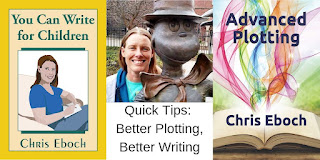
You can get this whole essay, and a lot more – including a chapter on Advanced Critique Questions – in You Can Write for Children: A Guide to Writing Great Stories, Articles, and Books for Kids and Teenagers. In this book, you will learn:

How to explore the wide variety of age ranges, genres, and styles in writing stories, articles and books for young people.
How to find ideas.
How to develop an idea into a story, article, or book.
The basics of character development, plot, setting, and theme.
How to use point of view, dialogue, and thoughts.
How to edit your work and get critiques.
Where to learn more on various subjects.
Order for Kindle, in paperback, or in Large Print paperback.

Chris Eboch is the author of over 100 books for children, including nonfiction and fiction, early reader through teen. She offers writing services, including developmental editing, book coaching, and writing for hire. See a list of her services. Learn about her online, on demand classes here.

Monday, November 20, 2023

Bios Made Easy: Tips for writing the perfect author bio for each purpose #amwriting #writing #writetip #writelife #author

Writers need bios, for query letters, on websites, for conference brochures. If we are writers surely we can write about ourselves. Yet while coordinating writing conferences, I discovered that even published authors often write poor bios, whether through modesty, carelessness, or overwriting. Many bios are entertaining, but don’t do their job.

The job is selling yourself and your books. Keep that focus in mind and the rest will follow.

Content: List the genre you write and perhaps name a couple of your publications. If you have many published books, you can mention the number but only go into detail with two or three – perhaps the most recent or popular. Specify the genre, as titles aren’t always clear by themselves. If you don’t have published books, mention your other credentials – “Cub Newshound’s articles appear in Slate,” for example.

Don’t get carried away listing awards. If each book has four or five minor awards, the reader bogs down in dull details. List the most prestigious, or combine them – “Ms. Inkslinger’s books have received five Readers’ Choice Awards from various states.”

Relevancy: If someone is considering buying your book or signing up to hear you speak, they want to know your success as a writer or speaker, not the names of your pets. Put your professional information first. Don’t start with your hobbies or childhood, unless something directly relates to your book. (For example, you’re a nurse and you wrote a hospital drama or you have seven cats and you write mysteries featuring cats.) Don’t thank your family for their support. Save that for your book dedications.

There’s another reason to put the key information up front. If you are submitting news to a media site or a quick bio to a conference coordinator, the editor may cut to save space. Make it easy for them to keep the first couple of sentences and cut the rest.

Style: You may need different bios for different uses – playful on a book flap; professional for a newspaper article; focused on teaching experience for a conference catalog; praising your popularity with readers for a book signing. Regardless, focus on information. Humor and lively writing are fine, but don’t get too wrapped up in sounding “literary.”

In a large conference brochure, the designer probably wants consistent style. A touch of formality may be appropriate – you’re trying to portray yourself as a professional. Pretend you’re someone else writing about you in the third person. “Bard Wordsmith is an award-winning author….” For a query letter, use first person. A website could go either way, but be consistent.

Length: Keep it short and to the point. If your bio will stand alone, on an individual brochure or flyer, try 100-200 words. If your bio will appear along with others, 50-100 words is plenty (or whatever they request). Many people will skim anyway. Include your website for more information.

I keep several versions and cut and paste as needed. A longer bio may have a sentence or two about each of my series. A shorter one may focus on a single series or provide general info on the kind of books I write. If I’m promoting my critiquing/editing business, I would focus on my experience as a teacher and workshop leader, noting that people can get recommendations and rates on my website. The details depend on what I’m trying to sell.

For example:

Kris Bock writes romance, mystery, and suspense. (Seven words)

Sweet romance bio under 150 words:

Kris Bock writes romance, mystery, and suspense. In the Accidental Billionaire Cowboys series, a Texas ranching family wins a fortune in the lottery. Who wouldn't want to be a billionaire? Turns out winning the lottery causes as many problems as it solves. Her Furrever Friends Sweet Romance series features the employees and customers at a cat café. Watch as they fall in love with each other and shelter cats.

Kris also writes a series with her brother, scriptwriter Douglas J Eboch, who wrote the original screenplay for the movie Sweet Home Alabama. The Felony Melanie series follows the crazy antics of Melanie, Jake, and their friends a decade before the events of the movie.

Get a free 10,000-word story set in the world of the Furrever Friends cat café when you sign up for the Kris Bock newsletter. Learn more at www.krisbock.com. (142 words)

Mystery Bio under 100 words:

Kris Bock has lived in ten states and one foreign country but is now firmly planted in the Southwest, where many of her books are set. In the Accidental Detective series, a witty journalist solves mysteries in Arizona and tackles the challenges of turning fifty. Kris’s romantic suspense novels feature outdoor adventures and Southwestern landscapes. Readers have called these novels "Smart romance with an Indiana Jones feel." Learn more at www.krisbock.com or sign up for the Kris Bock newsletter and get a free Accidental Detective story and more. (88 words)

If I’m promoting my children’s books, I have a different set of bios for that name. I can also include the following with my Kris Bock bio if I’m targeting writers:

Kris writes for children under the name Chris Eboch. She is the author of two books on the craft of writing, Advanced Plotting and You Can Write for Children: How to Write Great Stories, Articles, and Books for Kids and Teenagers. Learn more at chriseboch.com. Check out her self-paced writing classes or The Ten-Minute Writer series on YouTube. (58 words)

In some circumstances, I might mention that I live in New Mexico and enjoy hiking, or that my husband and I keep ferrets. Those are nice personal tidbits, but they don’t prove I’m writing books people want to read.

Any of these options keep the bio to under 200 words. I want to make sure I’m including links to learn more if it’s going somewhere online, and beat simplest version of my website URL if it’s in print.

For a digital site, I might give readers the direct links to Amazon in the United States and Amazon in the United Kingdom, plus a “genius” link that will take people to their local site. That means fewer clicks before someone has a chance to buy my books.

So what about you?

To get started, make a list of the facts that you want to share. Then write a simple, straightforward paragraph that includes them. Next, decide if it’s appropriate to dress it up, but as in all good writing, communication comes first.

Wednesday, December 7, 2016

WriteOnCon is Back! Join This Great Online Writing Conference for $5


I’ll be one of over 100 presenters at the Write on Conference. It’s incredibly cheap (as low as $1 but I recommend the $5 option), and you attend from the comfort of your own home! The conference will be hosted through the WriteOnCon website.

Here’s how the organizers explain the conference:

“WriteOnCon is a children’s literature conference for writers. When you’re trying to improve your writing craft or hoping to get published, conferences are a must on anyone’s list – but they can be stressful and expensive. Our goal is to provide a conference experience that’s easy, fun, and affordable. We encourage you to get involved, improve your writing, and connect to the kidlit community – all from the comfort of your own home.”


“December 15 is the last day for the WriteOnCon Indiegogo campaign. After this date admission will be available through our website but prices will go up (by just $1! but it’s still worth signing up now), and – more importantly – all of the critique perks will no longer be available.” (You can get query, picture book, or first pages critiques from published authors, editors and agents, for $20-$65, with some more expensive options for full manuscript critiques and other items.) “Also, everyone who signs up during the IGG campaign will be entered into a raffle to win one of two query critiques, a personal video call with an agent, or one of several ARCs for fabulous books releasing next year.”

They also offer “Ninja Agents” – you can post your query letter or writing sample in the forums, agents will stop by, and they may leave feedback – or even request the manuscript!

Here is the link to the IGG campaign, including critique perks: https://www.indiegogo.com/projects/writeoncon-2017-books/

The schedule is almost finalized. It includes Q&A sessions with authors, editors, and agents, live pitch sessions, panel discussions, and more. In addition, blogs and vlogs will offer additional information. Check out the entire schedule.

Follow @WriteOnCon on Twitter for updates.

Monday, April 25, 2016

Writing Workshops with Author/Teacher Chris Eboch

Online, in May: I'll be teaching an online workshop on Advanced Plotting: Keep Those Pages Turning.

COURSE DESCRIPTION: Many books and workshops teach the basics of plotting: conflict, complications, and climax. Now learn advanced techniques that will make a decent plot dynamic. Start with a “grab you by the throat” opening to pull readers into the story. Learn how to pack the plot full by complicating your complications. Control your pacing through sentence and paragraph length. And finally, cliffhanger chapter endings ensure late-night reading under the covers. Learn techniques to make any story or book better. Novelists will benefit from these insights, whether they are just starting out or have years of experience.

COST:  $125, which includes weekly assignments and individual feedback from the instructor. This class will be conducted through a Discussion Board, with the opportunity for students to ask questions and post homework samples.

BUY NOW: Advanced Plotting with Chris Eboch (4 weeks, starting 5/4/2016) Limit: 15 students. Early registration is recommended.


New York, in June: I'll present three workshops at the 21st Century Children's Nonfiction Conference. The conference is June 10-12 at Iona College in New Rochelle, NY. To learn more about the conference, visit the website.

My programs are:

Children's Nonfiction 101: Friday Intensives (an optional extra three-hour intensive): If you are new to children’s nonfiction publishing, or want a refresher about the current terminology, markets, and acquisition process, this intensive will be invaluable. Presented with Caryn Wiseman (Andrea Brown Literary Agency) and Michelle Bisson (Capstone).

Show Me the Money: What can an author earn? Learn how writers are making a living, through original book projects, work for hire books, magazines, test passages and more. Explore how to reach some of the less obvious markets, and discuss the attitude changes that need to happen to turn writing into a business.

How to Find NF Work: Where can you look? How do you follow up leads? Learn where and how best to connect with publishers, book packagers, and digital developers at conferences, book fairs, and exhibitions. Presented with author Jennifer Swanson


August, in North Carolina: I'll present two workshops at the Writers Who Run Retreat, August 3-6 in Fontana Dam, NC. You'll enjoy three full days packed with a morning 2-mile trail run (optional), breakfast, two 2-hour intensive workshops focused on craft and the business of writing, lunch, roundtable critique groups, free writing time, dinner, and a fun social event each evening. Learn more at the website.

My programs are:

Plotting Techniques: Are you struggling to plot your novel, or do you have a plot that  isn't working? Chris will help you learn how to plot like a pro.

Revisions that Sing: Revising and editing looks easy when Chris shows you how. Learn lots of tips and tricks to help tighten your manuscripts


If you wind up at any of these events, please be sure to say hi!

Chris Eboch is the author of almost 50 published books. Her writing craft books include Advanced Plotting and You Can Write for Children: How to Write Great Stories, Articles, and Books for Kids and Teenagers. She has sold over 60 writing articles to Writers Digest, Children’s Writer, and the annual Writer’s Guides.

Chris’s novels for ages nine and up include The Eyes of Pharaoh, a mystery in ancient Egypt; The Well of Sacrifice, a Mayan adventure; The Genie’s Gift, a middle eastern fantasy; and the Haunted series. Her recent nonfiction titles, published under the name M. M. Eboch, include World War I Battlefield Medicine, Native American Code Talkers, A History of Film, and Chaco Canyon. Learn more at www.chriseboch.com or her Amazon page.

Chris also writes for adults under the name Kris Bock. Kris Bock writes action-packed romantic suspense involving outdoor adventures and Southwestern landscapes. Read excerpts at www.krisbock.com or visit her Amazon page.

Monday, March 28, 2016

21st Century Children’s Nonfiction Conference

The 21st Century Children’s Nonfiction Conference is the interchange for everyone connected with Children’s Nonfiction … publishers, authors, illustrators, educators, librarians, and digital developers. This weekend of workshops, publisher panels, open-table conversations, and social gatherings provides excellent opportunities to learn and connect with people at the leading edge of this field.

June 10-12 at Iona College, New Rochelle, New York.
Conference details are at www.21CNFC.com


I'll be presenting three workshops:

Children's Nonfiction 101
If you are new to children’s nonfiction publishing, or want a refresher about the current terminology, markets, and acquisition process, this intensive will be invaluable. Topics include: The categories of nonfiction for different ages; Does nonfiction have to be 100% true?; The difference between trade and educational publishing; Work for hire books, magazine articles, and test passages; Identifying markets and targeting your work to specific markets; What publishers look for in samples or submissions; and Writing nonfiction that reads like fiction.

Presented by: Caryn Wiseman (Andrea Brown Literary Agency), Chris Eboch (Author/Instructor), Michelle Bisson (Capstone)

Show Me the Money
What can an author earn? Learn how writers are making a living, through original book projects, work for hire books, magazines, test passages and more. Explore how to reach some of the less obvious markets, and discuss the attitude changes that need to happen to turn writing into a business.

Presented by: Chris Eboch (Author/Instructor)

How to Find NF Work
Where can you look? How do you follow up leads? Learn where and how best to connect with publishers, book packagers, and digital developers at conferences, book fairs, and exhibitions.

Presented by: Chris Eboch (Author/Instructor) and Jennifer Swanson (Author)

This is only a small sampling of the great programming at the conference. Please join us if you have the chance, and say "Hi" at some point during the weekend! See the complete faculty list and schedule here.

Friday, October 14, 2011

Make the Most of Your Conference: How to Follow Up


In July, I did a couple of posts about getting ready for a writing conference. I've heard conference reports from around the country in the last couple of weeks, so for those of you who've had a chance to attend one, here's the next step -- what you should do after the conference.
 
After the conference:
            You talked to strangers, made friends, and maybe even chatted with an editor. Time to go home and relax, right? Not quite. All that hard work only pays off if you follow up. Write “nice to meet you” notes to all those people who gave you their business cards. Thank anyone who gave you advice. And of course, send your manuscript or query to anyone who expressed interest in it. If the manuscript isn’t ready yet, write the editor stating that you are looking forward to sending your manuscript when it’s finished in X months.
            You should also type up your notes while they’re fresh in your mind. A few jotted phrases that made perfect sense during an inspiring talk can read like hieroglyphics a month later.
            Then set some goals based on what you learned. A good conference may provide you with dozens of pages of advice and ideas. Don’t try to do everything at once, or worse, ignore it all because you feel overwhelmed. Instead, choose three things to focus on. They might involve craft, research, or marketing. For example, here’s my list after attending a Book Boot Camp with Australian author Jen McVeity:
  • Practice strong story starts.
  • Investigate writing for easy reader series.
  • Use Story Structure guide to edit nonfiction bio.
            I might review my notes in a few months and set some new goals. But for now I have someplace to start.
            Finally, critique the conference. Think about the workshops, speakers, events, other attendees, and your own behavior. Was it worth your time? How can you prepare better for next time? Make notes to review before your next conference.
            I’m already looking forward to my next conference. I’ll hear great speakers and learn about the craft of writing and the business of publishing. I’ll see people I met last year, and I know I’ll make new friends. I can hardly wait.

Friday, July 15, 2011

Connecting at Conferences 2

On Wednesday I talked about getting into the right mind frame for a writing conference. Armed with the proper attitude, you’re sure to have a good time. Get even more out of the conference by planning ahead.

If you're new to the biz, read books to learn the basics—how the publishing industry works, standard submission guidelines, the genres—so you won’t be confused when speakers throw around industry terms. You can also direct your questions better, to take advantage of a particular speaker’s expertise.

Next, investigate the conference speakers. Review editors’ submission guidelines and study the books they’ve edited. Read books by the other speakers. Be prepared to offer honest compliments of their work or to ask intelligent questions. Then you won’t go blank when you’re suddenly faced with your idol.

The web is a great place to find articles by or about the speakers. You may even find photographs of them. At one conference cocktail party, my friend Cora Goss-Grubbs looked at a man standing by himself and said, “That’s Agent ___.” Because she recognized him from his picture, we got in a nice long chat before anybody else realized who he was.

Prepare for such opportunities by practicing one-sentence synopses of your manuscripts. You don’t want to ramble and stammer when someone—especially an agent or editor—asks what you’re working on. If they don’t ask, don’t be pushy, but try asking them what they want. According to children’s book author Shirley Raye Redmond, “I sold my very first juvenile novel (Grampa and the Ghost) by simply asking the editor what she was looking for. She told me and I said, ‘I think I have something you might like.’”

When you meet someone, it’s nice to have an official way to exchange information, so make business cards. I print color business cards on my home computer, with the cover of my novel on one side and contact information on the reverse. Even a simple card with just your name and e-mail is useful. When you exchange cards, jot notes about the giver on the ones you get. You might write something like, “2011 SCBWI LA. 40s, short brown hair. Writing sci-fi for teens.” Then when you get back from the conference with a handful of cards, you’ll find it much easier to remember who gave them to you.

Go!

You’ve studied the speakers and practiced your synopses. You have a notebook, a pen, and a pocketful of business cards. Arrive early and practice your networking—or friendship—skills. Smile, say hello, and ask a simple question. Take an interest in people. Ask what they write. Offer compliments, ask questions, and listen. When I’m feeling shy and alone, I find someone who looks even more shy and alone. I walk up to them, smile, and say, “How are you enjoying the conference?” They are always delighted to talk. 

It helps to pair up with a friend for the conference. When we met the agent, Cora told him about my published novel, The Well of Sacrifice. From me it would have been bragging, whereas she just sounded complimentary. At another conference party, I told an editor about my friend Molly’s project. When I introduced her to Molly, the editor asked to see the manuscript. It’s easier to rave about someone else’s work than your own. But be careful not to spend your whole time with just one friend. After all, your goal is to make new connections, so work together to meet people.

Wednesday, July 13, 2011

Connecting at Conferences

In honor of the upcoming SCBWI conference in LA, here's an article I wrote for Writer's Digest a few years ago. I'll post the next section on Friday.

The big writing conference. Anticipation. Excitement. You’ll dazzle an editor with your book pitch. She’ll beg to see it right away ….

You arrive, one among the hordes. Old friends hug and chatter. The display table overflows with attendees’ published books. The conference staff body-guard the editors like Secret Service agents around the President.

Anxiety. Insecurity. You are a stray cat among lions. Maybe you shouldn’t have come ….

A conference can provide inspiration, camaraderie, and marketing opportunities. Or it can waste your money and shake your confidence. Make sure you make the most of it.

It’s All in Your Head

Start by changing your attitude. When people hear the word “networking,” most imagine trying to impress bigwigs who could help their career. But many writers don’t feel comfortable selling themselves. If your goal at a conference is to grab an editor and convince her you’re wonderful, you’ll feel anxious. And if you fail to wow—or even meet—the editor, you may feel like a failure.

Instead, think of networking as making friends. During her first major conference, children’s book writer Holly Cupala decided to “think about making connections with people who share a love of children’s literature—future friends rather than future contacts.” During the four-day conference, she talked with dozens of people, including many of the famous speakers. She says, “I chatted with people I never would have dreamed of walking up to if I was in ‘networking’ mode. I connected with people by being open and letting go of expectations.”

Talk to everyone, from beginners to the pros. You never know who might be fascinating—or helpful in the future. Today’s “nobody” may be tomorrow’s success story, on a first-name basis with top editors and agents. A few years ago, I met a woman who had never published and who had no contacts in the writing world. Two years later, she ran a website organizing online chats between authors and schools. We exchange favors when we have a chance—not because we want something in return, but because we’re friends.