Friday, November 27, 2020

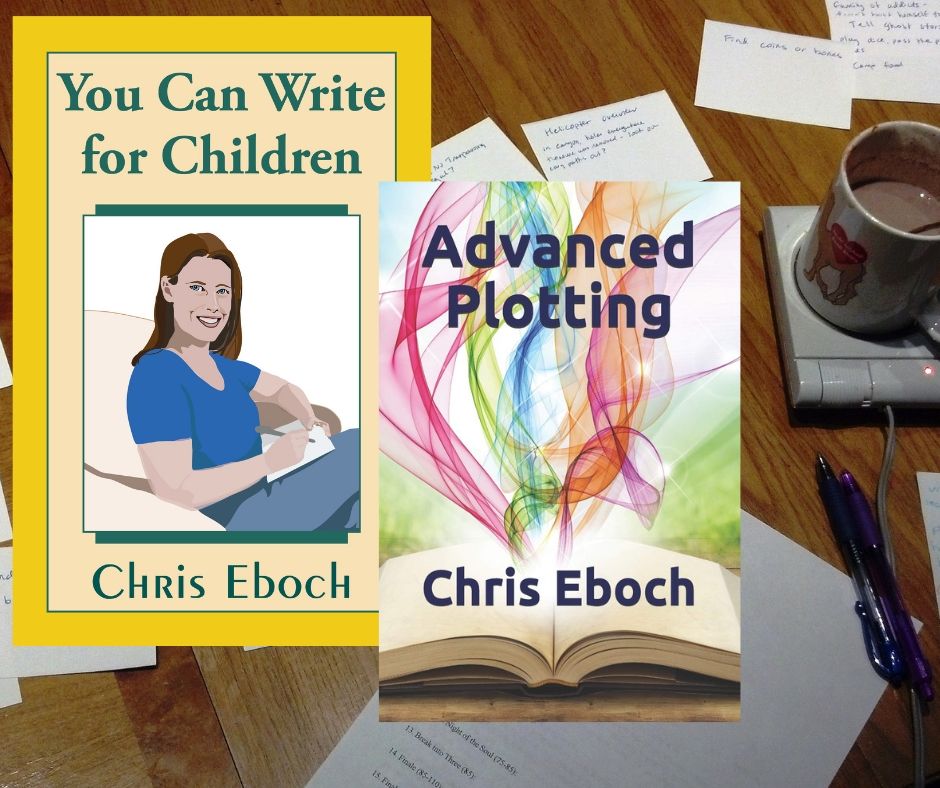
Gifts for the writers in your life - or for you! #Holiday #writing guides #amwriting

Treat yourself to a writing guide - or get them for your writing friends and family! 
To send someone an e-book from Amazon, look at the righthand side of the page for the “buy for others” button and they'll get an email to claim your gift, either right away or on a date you choose.

You Can Write for Children: How to Write Great Stories, Articles, and Books for Kids and Teenagers

The paperback is $12.99, Kindle is $4.99, or you can read it for free if you have a Kindle Unlimited subscription.

I have two children’s picture books on my computer, and, after reading this book, I know what I need to do to make them better. 

This is a terrific resource book for anyone who has considered writing for children. Each chapter has a tip section as well as specific resources, concrete examples, and easy to understand explanation of terms and topics. Excellent book!

 A definite “winner” in the “how-to-write” book library.

Grab a copy for aspiring writers you know, or put it on your wish list!

If you know writers who write for either adults or children who need something more advanced, try Advanced Plotting. The paperback is only $9.99,
 Kindle is $4.99, or you can read it for free if you have a Kindle Unlimited subscription.

Advanced Plotting
is designed for the intermediate and advanced writer: you’ve finished a few manuscripts, read books and articles on writing, taken some classes, attended conferences. But you still struggle with plot, or suspect that your plotting needs work.

This really is helping me a lot. It’s written beautifully and to-the-point. The essays really help you zero in on your own problems in your manuscript. The Plot Outline Exercise is a great tool!

I just read and—dissected—your well written book: Advanced Plotting. It’s now highlighted in bright orange and littered with many of those little 3M sticky labels. GOOD JOB. There are too many just-for-beginners books out there. Yours was a delight.

Advanced Plotting is helping me to be more focused, to stop and ask the right questions, to dig deeper.

See all of Chris’s books on Amazon or Amazon UK. (For other countries click here.)

Chris Eboch is the author of over 60 books for children, including nonfiction and fiction, early reader through teen. Her novels for ages nine and up include The Eyes of Pharaoh, a mystery in ancient Egypt; The Well of Sacrifice, a Mayan adventure used in many schools; The Genie’s Gift, a middle eastern fantasy; and the Haunted series, about kids who travel with a ghost hunter TV show, which starts with The Ghost on the StairsChris also writes for adults under the name Kris Bock.

Learn more at chriseboch.com.

Monday, October 12, 2020

Two Simple Questions to Turn Your Idea into a Great Story: Setting up Plot Conflict #amwriting #writing #NaNoWriMo

Are you preparing for National Novel Writing Month (NaNoWriMo)? This challenge is designed to get people moving quickly through a first draft of a novel. Here's some help as you think about your story.

To develop your story, you'll need conflict. But conflict doesn't just come from dramatic things happening. It comes from the character – what he or she needs and wants, and why he or she can't get it easily.

Start with a premise: a kid has a math test on Monday. Exciting? Not really. But ask two simple questions, and you can add conflict.


• Why is it important to the character? The stakes should be high. The longer the story or novel, the higher stakes you need to sustain it. A short story character might want to win a contest; a novel character might need to save the world.

• Why is it difficult for the character? Difficulties can be divided into three general categories, traditionally called man versus man, man versus nature, and man versus himself. You can even have a combination of these. For example, someone may be trying to spy on some bank robbers (man versus man) during a dangerous storm (man versus nature) when he is afraid of lightning (man versus himself).


Back to the kid with the math test. Let’s say, if he doesn’t pass, maybe he will fail the class, have to go to summer school, and not get to go to soccer camp, when soccer is what he loves most, and all his friends will be going. That’s why it’s important. Assuming we create a character readers will like, they'll care about the outcome of this test, and root for him to succeed.

Our soccer lover could have lots of challenges—he forgot his study book, he’s expected to baby-sit his distracting little sister, a storm knocked out the power, he has ADHD, or he suffers test anxiety. But ideally we would relate the difficulty to the reason it's important. So let's say he has a big soccer game Sunday afternoon, and is getting pressure from his coach and teammates to practice rather than study for his test. Plus, of course, he'd rather play soccer anyway.


We now have a situation full of potential tension. Let the character struggle enough before he succeeds (or fails and learns a lesson), and you’ll have a story. And if these two questions can pump up a dull premise, just think what they can do with an exciting one!


Come back next time for more tips on linking your conflict to your character.


Do you need help analyzing a plot? Download The Plot Outline Exercise from Advanced Plotting in a form you can edit and reuse! 

Chris Eboch is the author of over 60 books for children, including nonfiction and fiction, early reader through teen. Her novels for ages nine and up include The Eyes of Pharaoh, a mystery in ancient Egypt; The Well of Sacrifice, a Mayan adventure; The Genie’s Gift, a middle eastern fantasy; and the Haunted series, about kids who travel with a ghost hunter TV show. Learn more or read excerpts at www.chriseboch.com or visit her page on Amazon or Amazon UK. (For other countries click here.)


Chris also writes for adults under the name Kris Bock. Her Furrever Friends Sweet Romance series features the employees and customers at a cat café. Watch as they fall in love with each other and shelter cats. Get a free 10,000-word story set in the world of the Furrever Friends cat café when you sign up for the Kris Bock newsletter. Learn more at www.krisbock.com or visit Kris Bock’s Amazon US page or Amazon UK page. (For other countries click here.)

Monday, October 5, 2020

“What do I do with my idea?” How to Turn Inspiration into a Great Story: #amwriting #writing #NaNoWriMo

National Novel Writing Month (NaNoWriMo) is a challenge designed to get people moving quickly through a first draft of a novel. Prep for November by starting with the NaNo Prep 101 or read on!

People often ask writers, “Where do you find your ideas?” But for a writer, the more important question is, “What do I do with my idea?”

If you have a “great idea,” but can’t seem to go anywhere with it, you probably have a premise rather than a complete story plan. A story has four main parts: situation, complications, climax, and resolution. You need all of them to make your story work.

The situation should involve an interesting main character with a challenging problem or goal. Even this takes development. Maybe you have a great challenge, but aren’t sure why a character would have that goal. Or maybe your situation is interesting, but doesn’t actually involve a problem.

For example, I wanted to write about a brother and sister who travel with a ghost hunter TV show. The girl can see ghosts, but the boy can’t. That gave me the characters and situation, but no problem or goal. Goals come from need or desire. What did they want that could sustain a series?

Tania feels sorry for the ghosts and wants to help them, while keeping her gift a secret from everyone but her brother. Jon wants to help and protect his sister, but sometimes feels overwhelmed by the responsibility. Now we have characters with problems and goals. The story is off to a good start.

•           Make sure your idea is specific and narrow. Focus on an individual person and situation, not a universal concept. For example, don’t try to write about “racism.” Instead, write about one character facing racism in a particular situation.

•           Ask why the goal is important to the character. The longer the story, the higher stakes needed to sustain it. A short story character might want to win a contest; a novel character might need to save the world.

•           Ask why this goal is difficult. Difficulties fall into categories traditionally called man versus man, man versus nature, and man versus himself. You can even combine these. Your character may hunt bank robbers (person versus person) during a dangerous storm (person versus nature) when he is afraid of lightning (person versus himself).

•           Even if your main problem is external, give the character an internal flaw that contributes to the difficulty. This adds complications and also makes your character seem more real. For some internal flaws, see the seven deadly sins: lust, gluttony, greed, sloth, wrath, envy, and pride.

•           Test the idea. Change the character’s age, gender, or looks. Change the point of view, setting, external conflict, internal conflict. Choose the combination that has the most dramatic potential.

Next time: Building the middle of your story.

For more help on developing your stories, check out these titles: 

You Can Write for Children: How to Write Great Stories, Articles, and Books for Kids and Teenagers is available for the Kindle, in paperback, or in Large Print paperback

Advanced Plotting is designed for the intermediate and advanced writer: you’ve finished a few manuscripts, read books and articles on writing, taken some classes, attended conferences. But you still struggle with plot or suspect that your plotting needs work. This book can help.


Chris Eboch is the author of over 60 books for children, including nonfiction and fiction, early reader through teen. Her novels for ages nine and up include The Eyes of Pharaoh, a mystery in ancient Egypt; The Well of Sacrifice, a Mayan adventure; The Genie’s Gift, a middle eastern fantasy; and the Haunted series, about kids who travel with a ghost hunter TV show, which starts with The Ghost on the Stairs. Her writing craft books include You Can Write for Children: How to Write Great Stories, Articles, and Books for Kids and Teenagers, and Advanced Plotting.

Learn more or read excerpts at www.chriseboch.com or visit her page on Amazon or Amazon UK. (For other countries click here.)

Monday, September 28, 2020

You Can Write Great #KidLit for Children: #99cents sale ends soon #amwriting #writing

Sale ends soon:  

You Can Write for Children: How to Write Great Stories, Articles, and Books for Kids and Teenagers is on sale for 99 cents through Tuesday, September 29.

Get it from Amazon US or Amazon UK.

Remember the magic of bedtime stories? When you write for children, you have the most appreciative audience in the world. But to reach that audience, you need to write fresh, dynamic stories, whether you’re writing rhymed picture books, middle grade mysteries, edgy teen novels, nonfiction, or something else. This book will show you how.

In this book, you will learn:

  • How to explore the wide variety of age ranges, genres, and styles in writing stories, articles and books for young people.
  • How to find ideas.
  • How to develop an idea into a story, article, or book.
  • The basics of character development, plot, setting, and theme – and some advanced elements.
  • How to use point of view, dialogue, and thoughts.
  • How to edit your work and get critiques.
  • Where to learn more on various subjects.

Whether you’re just starting out or have some experience, this book will make you a better writer – and encourage you to have fun!

Grab the book on sale now!

Amazon US.

Amazon UK.

You Can Write for Children: How to Write Great Stories, Articles, and Books for Kids and Teenagers is also available in paperback, or in Large Print paperback.

Chris Eboch is the author of over 60 books for children, including nonfiction and fiction, early reader through teen. Her novels for ages nine and up include The Eyes of Pharaoh, a mystery in ancient Egypt; The Well of Sacrifice, a Mayan adventure; The Genie’s Gift, a middle eastern fantasy; and the Haunted series, about kids who travel with a ghost hunter TV show, which starts with The Ghost on the Stairs. Her writing craft books also include Advanced Plotting.

Learn more at https://chriseboch.com/ or her Amazon page

Friday, September 25, 2020

#AmWriting and Running: 6 #Writing Lessons Learned from Jogging #NWHFD #fitnessday

In March of 2011 I started jogging. Despite the occasional illness, injury, and ‘I don’t wanna,’ I’m still getting out regularly. On one long and rather tedious solo run, I started making connections between jogging and writing and life. I'm sharing them in honor of National Women's Health and Fitness Week (the last week in September each year). See more links on how to “Stay Well, Stay Safe” from WIC.

Get Some Running Buddies

It helps to have inspiration. I started jogging with a Couch to 5K group that met twice a week. Having the regular schedule kept us on track. The program helped us pace ourselves, starting with short runs and frequent walks, and working up to a 45 minute run. We also had an experienced leader to offer advice.

Several of us continued running together after the program ended. I wouldn’t get out there as often if people weren’t waiting for me. I’d be tempted to stop early, if I didn’t have the encouragement of the group. Hey, peer pressure is powerful! You might as well make it work for you. Plus, it’s more fun to run with other people. (Granted, the pandemic makes this more challenging. Some people are apparently doing virtual social jogs where they chat on a group phone call or Zoom.)

For writers, it’s important to find the right peer group for your needs. For many, this is a critique group. They may be large or small, meet in person or online, have open or closed membership, get together weekly or monthly or as needed. Finding a group that suits your needs is invaluable.

Other writers share goals and deadlines, checking in with a friend daily or weekly to report progress. There’s that peer pressure again! Even a non-writing friend can help hold you accountable. (But choose carefully. You don't need someone pressuring you to finish your novel in six months or run a seven-minute mile.)

Finally, social groups can provide camaraderie and networking. I live in a small town with a science and engineering college; I know far more computer geeks than writers. But by making monthly trips to Albuquerque to attend a writing meeting, I’ve made many friends who understand what I do. I’ve also made connections by teaching workshops and guest speaking for groups like Sisters in Crime. 

For those who can’t attend in person (or all of us during the pandemic), online discussion boards, listserves, and online classes offer information and a sense of connection. The New Mexico SCBWI group of children's book writers and illustrators has a weekly online "coffee chat" which has been fantastic for keeping in touch. Another writing friend started inviting people to occasional evening chats – "the folks I would grab at a conference to go out for drinks."

Jog - and Write - for Distance, Not Speed

It really is about the journey, not how fast you get there. Pace yourself, and enjoy the journey, or you might burn out along the way. If you can see the end, or at least imagine the cheering crowds and free food, it might give you the extra boost you need to keep going. But take time to enjoy the sights, and the experience will be a lot more fun.

As a writer, don’t focus so much on the response to your query letters. Sure, celebrate successes, and try to learn from disappointments, but put most of your energy into enjoying the journey. (That works for the rest of life, too.)

But Keep Moving Your Feet (or Fingers)

A slow pace may get you there, but if you have a long way to go, you might as well do it running. A marathon will take a lot longer at a stroll than at a jog, even a slow jog. Run when you can, walk when you need a rest, but keep moving. That’s the only way to reach the end.

Take the time you need to learn and practice your writing craft. Do as many drafts as you need to polish your novel. Don’t rush, but do keep working. Write a page a day, and you’ll have a complete draft in a year. It may not be perfect, but it will be more than what you started with.

Practice Makes Perfect, or At Least Lessens the Pain

If you’re training, you need to get out regularly. Running once a month will just leave you sore and frustrated each time, and you won’t see any progress in your fitness.

It’s the same with writing. Establishing habits and sticking to them will keep your mind fit. Writing several times a week will hone your skills and make it easier to get started next time.

Beware of Shortcuts

If I map out a 5K run, but take every shortcut, that could cut the distance down to 3 ½K. Easier, sure, but that won’t prepare me for running a 10K. It’s the same with life. Whether you’re trying to switch careers, meet the right partner, or finish a novel, some shortcuts may help, but others may do more harm than good.

I work with a lot of writing students. The beginners want to know if they’ll get published after taking one course. Nobody wants to spend 10 years learning how to write, but you need to do the work in order to earn the reward at the end. If you beg your friend to send your rough draft to her editor, you’ll blow your chance to make the best use of that connection. If you self publish your work before it’s ready, you’ll waste time that could be better spent working on your craft.

Sometimes the long, hard path is the only one that gets you where you want to go.

Whether Running or Writing, Push Yourself Sometimes

With enough practice, you should get better. When I started jogging, it was a struggle to go for 10 minutes without a break. Six months later, I could make it through 45 minutes without stopping.

And then I plateaued. Jogging had become comfortable, if not easy. Why cause more pain by trying to go farther or faster?

Because that’s the only way to get better. And most likely, it’s the only way to stay interested. Fortunately, one of my jogging partners was great about coming up with new workouts. We added in some sprints one day, did hills another day. We chose different routes on different terrains. Variety keeps it interesting, which makes it easier to work hard.

With my writing, I find that I get bored if I become too comfortable with something. After publishing a dozen children’s books as Chris Eboch, I wanted a change. I started writing romantic suspense for adults, using the name Kris Bock. This brought new challenges – writing books two or three times as long as what I was used to, exploring romantic subplots, delving deeper into character. I didn’t always get things right the first time, but I became a better writer – and I renewed my interest in writing.

Are you a writer who runs? Join the Writers Who Run Facebook Group to meet up with like-minded folks and learn about events.

Kris Bock writes novels of romance, mystery, and suspense. Her Furrever Friends Sweet Romance series features the employees and customers at a cat café. Watch as they fall in love with each other and shelter cats. Get a free 10,000-word story set in the world of the Furrever Friends cat café when you sign up for the Kris Bock newsletter. You’ll also get a printable copy of the recipes mentioned in the cat café novels.

Kris also writes romantic suspense set in the Southwestern U.S. If you love Mary Stewart or Barbara Michaels, try Kris Bock’s stories of treasure hunting, archaeology, and intrigue in the Southwest. Learn more at www.krisbock.com or visit Kris Bock’s Amazon US page or Amazon UK page. (For other countries click here.) 

Whispers in the Dark features archaeology and intrigue among ancient Southwest ruins. What We Found is a mystery with strong romantic elements about a young woman who finds a murder victim in the woods. In Counterfeits, stolen Rembrandt paintings bring danger to a small New Mexico town. Read excerpts at www.krisbock.com or visit her Amazon page

Wednesday, September 23, 2020

You Can Write for Children: A #KidLit Guide #99c Sale #Writing #amwriting

You Can Write for Children: How to Write Great Stories, Articles, and Books for Kids and Teenagers is on sale for 99 cents today through Tuesday, September 29.

Get it from Amazon US or Amazon UK.

Remember the magic of bedtime stories? When you write for children, you have the most appreciative audience in the world. But to reach that audience, you need to write fresh, dynamic stories, whether you’re writing rhymed picture books, middle grade mysteries, edgy teen novels, nonfiction, or something else. This book will show you how.

In this book, you will learn:

  • How to explore the wide variety of age ranges, genres, and styles in writing stories, articles and books for young people.
  • How to find ideas.
  • How to develop an idea into a story, article, or book.
  • The basics of character development, plot, setting, and theme – and some advanced elements.
  • How to use point of view, dialogue, and thoughts.
  • How to edit your work and get critiques.
  • Where to learn more on various subjects.

Whether you’re just starting out or have some experience, this book will make you a better writer – and encourage you to have fun!

Grab the book on sale now!

Amazon US.

Amazon UK.

You Can Write for Children: How to Write Great Stories, Articles, and Books for Kids and Teenagers is also available in paperback, or in Large Print paperback.

Chris Eboch is the author of over 60 books for children, including nonfiction and fiction, early reader through teen. Her novels for ages nine and up include The Eyes of Pharaoh, a mystery in ancient Egypt; The Well of Sacrifice, a Mayan adventure; The Genie’s Gift, a middle eastern fantasy; and the Haunted series, about kids who travel with a ghost hunter TV show, which starts with The Ghost on the Stairs. Her writing craft books also include Advanced Plotting.

Learn more at https://chriseboch.com/ or her Amazon page

Sunday, August 23, 2020

Balancing Art and Commerce in #Writing - tips for the #Writerslife #AmWriting


I've been talking about goals. It’s worth spending some time figuring out the balance between doing what you want to do and doing what you need to do to make money. 

Art versus Commerce in Writing Goals 


Molly also writes as Cece Barlow
Molly Blaisdell started by writing novels, but she needed to make an income and wanted to do it from writing. To turn writing into a career, she advises, “Take any gig you can get. If the checks don’t bounce, it’s a good gig.”

This attitude has given her dozens of books in print, most of them work for hire beginning readers or picture books. It also led to her first trade picture book, Rembrandt and the Boy Who Drew Dogs. “Work for hire made me bold and helped me put together a professional front,” Blaisdell says.

Not everyone puts income first. For Louise Spiegler, another job pays the bills. With writing, the main goal is always “to write compelling, passionate, funny, tragic, thought-provoking books that really speak to my readers. This means I need to keep pushing myself to work on my craft, to think hard and work hard.”

But Spiegler recognizes that being a successful writer doesn’t stop with craft. “Professionally, I also wanted to make sure that I get more people reading my second book, The Jewel and the Key than read my first. I get emails from people who have read The Amethyst Road and felt very moved by it. This is the most rewarding thing for me. I just want to make sure every book finds its readers.”

Janet S. Fox, author of picture books and novels such as The Charmed Children of Rookskill Castle, says, “I want my books to be exquisite. To be loved. To be read forever. To sell, yes—to be commercial—but to be beautiful, and beautifully crafted. I’m constantly questioning my work from two angles: will readers read it? And, will it be eternally beautiful? Commerce and craft—my overwhelming goal is to keep these two warring factions in balance.”

Keeping Your Writing Goals Flexible


Goals can change over time, as we learn more about ourselves and our field. Author Esther Hershenhorn discovered joy in helping other writers tell their stories well. “I began coaching writers in person, via the mail, on the phone, from near and far,” she said.

“Like my character Pippin Biddle in my picture book Fancy That, whose hidden talents save the day as well as his three orphaned sisters, I returned home from my journey with a prize far better than what I’d first sought. I spend my days doing what I love and loving what I do: writing, teaching and coaching other writers.”

Hershenhorn adds, “I remind my students to be open to unimagined possibilities and opportunities. I’ve watched writers assess their interests, talents, and experiences to find related children’s book niches—reviewing children’s books for a journal or website, writing curriculum materials, working with book fairs, selling at bookstores, writing PR plans for fellow writers, returning to library school.”

Chris Eboch’s book Advanced Plotting helps writers fine-tune their plots, while You Can Write for Children: How to Write Great Stories, Articles, and Books for Kids and Teenagers offers great insight to beginning and intermediate writers. Her novels for ages nine and up include The Eyes of Pharaoh, a mystery that brings ancient Egypt to life; and The Well of Sacrifice, an action-packed drama set in ninth-century Mayan Guatemala. Learn more at https://chriseboch.com/ or her Amazon page.
Chris also writes for adults under the name Kris Bock. Her Furrever Friends Sweet Romance series features the employees and customers at a cat café. Watch as they fall in love with each other and shelter cats. Get a free 10,000-word story set in the world of the Furrever Friends cat café when you sign up for the Kris Bock newsletter.

Kris Bock also writes romantic suspense novels. Fans of Mary Stewart, Barbara Michaels, and Nora Roberts will want to check out Kris Bock’s romantic adventures. “Counterfeits is the kind of romantic suspense novel I have enjoyed since I first read Mary Stewart’s Moonspinners.” 5 Stars – Roberta at Sensuous Reviews blog

Learn more at www.krisbock.com or visit Kris Bock’s Amazon US page or Amazon UK page. (For other countries click here.) Sign up for the Kris Bock newsletter  for announcements of new books, sales, and more.

Sunday, August 16, 2020

Goal Setting: Tips and Resources #Writing tips for the #Writerslife #AmWriting

Last week I talked about the importance of setting goals and occasionally reviewing them. Here are some resources to help you identify the specific steps you need to take to reach your overall goals.

Susan Uhlig, author of dozens of magazine stories and articles and a writing teacher, reviewed her annual goals on her website and explored what worked or didn't, and why, with advice for other goal setters. Here's an excerpt:

Some writers have word or page count goals per day. Others have a goal of finishing a chapter in a certain amount of time. Illustrators might have a number of paintings or sketches to accomplish in a certain time. What matters is to have what in the business world of project management is called a S.M.A.R.T. goal. Specific, Measurable, Attainable, Realistic and Timely. A goal such as "get an agent" isn't really under your control. A goal of "submit so many queries to agents by this date" is under your control and measurable.

Read her entire post on her website.


Amy Houts shared tips on goals lists. Here’s one tip I really like: Be specific—don’t just write, for example, “Complete assignment.” Break the assignment down into specific steps. For any of the writing courses, these steps would include: reading the course manual, working through the exercises, scanning the related reading, and studying your textbooks. Once that’s completed, you can begin writing the first draft, editing, revising, and proofreading. 

I like this because it helps you stay realistic. If your goal is “I’m going to write that sci-fi story this weekend!”, you may be disappointed and frustrated when you work really hard at it but still fail. But if you break it down into steps, you may realize that by the time you research, brainstorm, and outline, you’ll have filled up your available free time. Then you can set a more realistic goal for this weekend and the next one.


EXERCISE: Goal Setting 


•    What is my primary writing goal?
•    What are my secondary writing goals?
•    How can these goals work together? Do they contradict each other at all? Do they interfere with other career, family or personal goals?
•    What steps do I need to take? Do I need to work on specific craft techniques, time management, market research, or submissions?

•    Which steps come first? How can I schedule the steps to reach my goals?

Click on the “goal setting” link in the right-hand column for more on this topic.

Have certain goals setting exercises work for you? Do you have any advice to share?


Kris writes for children under the name Chris Eboch. Her novels for ages nine and up include The Eyes of Pharaoh, a mystery that brings ancient Egypt to life; and The Well of Sacrifice, an action-packed drama set in ninth-century Mayan Guatemala. Her book Advanced Plotting helps writers fine-tune their plots, while You Can Write for Children: How to Write Great Stories, Articles, and Books for Kids and Teenagers offers great insight to beginning and intermediate writers. Learn more at https://chriseboch.com/ or her Amazon page.

Chris also writes for adults under the name Kris Bock. Her Furrever Friends Sweet Romance series features the employees and customers at a cat café. Watch as they fall in love with each other and shelter cats. Get a free 10,000-word story set in the world of the Furrever Friends cat café when you sign up for the Kris Bock newsletter.

Kris Bock also writes romantic suspense novels. Fans of Mary Stewart, Barbara Michaels, and Nora Roberts will want to check out Kris Bock’s romantic adventures. “Counterfeits is the kind of romantic suspense novel I have enjoyed since I first read Mary Stewart’s Moonspinners.” 5 Stars – Roberta at Sensuous Reviews blog

Learn more at www.krisbock.com or visit Kris Bock’s Amazon US page or Amazon UK page. (For other countries click here.) Sign up for the Kris Bock newsletter  for announcements of new books, sales, and more.